

Top 6 Pricing Strategies for Recurring Revenue
Discover our 6 core recurring revenue pricing strategies. Find out how they work, their advantages, and trade-offs. Learn how to fine-tune them and diagnose pricing misalignment.
Last updated October 23, 2026

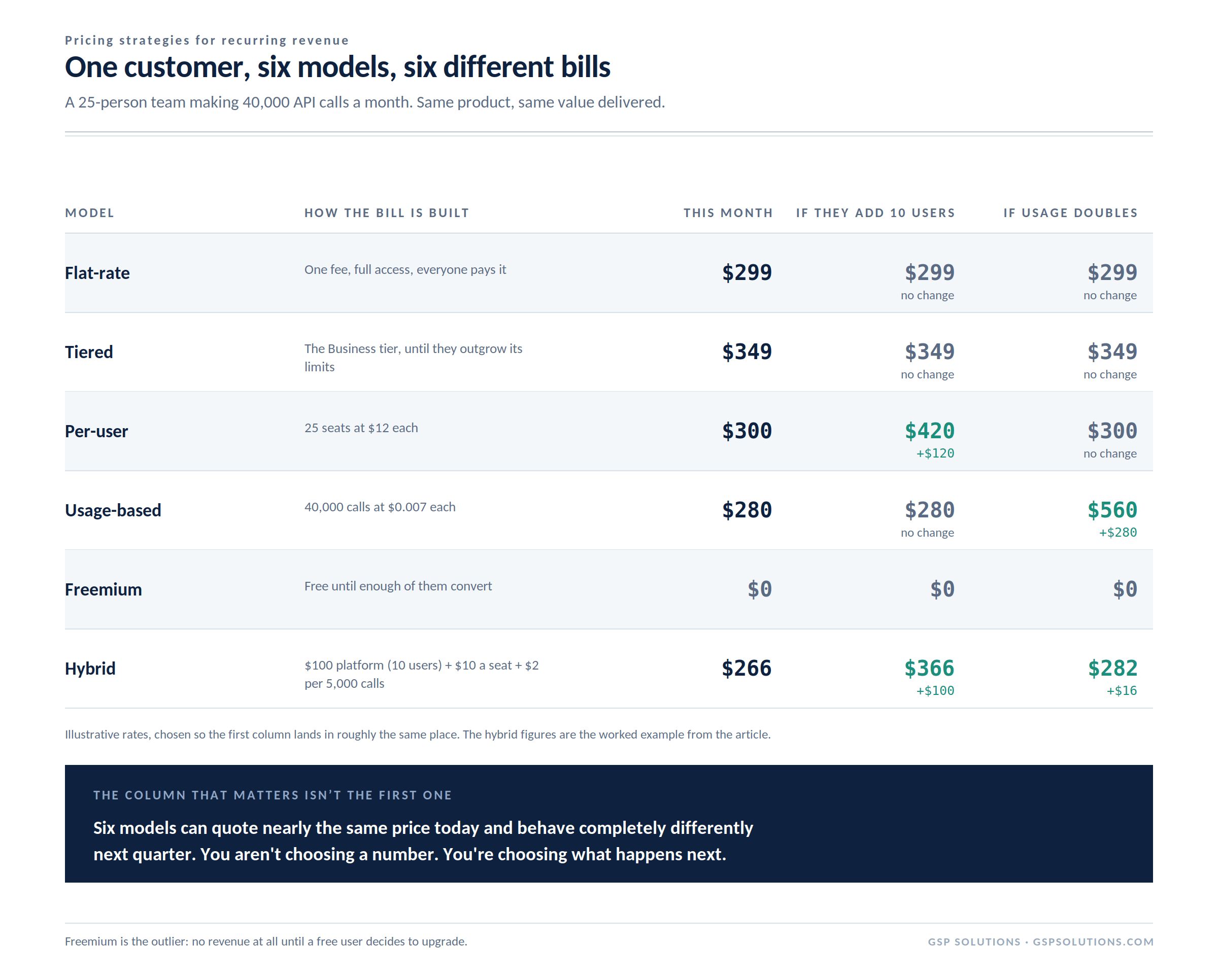
Recurring revenue businesses use six core pricing strategies:
Step 1: Flat-Rate Pricing
Step 2: Tiered Pricing
Step 3: Per-User Pricing
Step 4: Usage-Based Pricing
Step 5: Freemium Pricing
Step 6: Hybrid Pricing
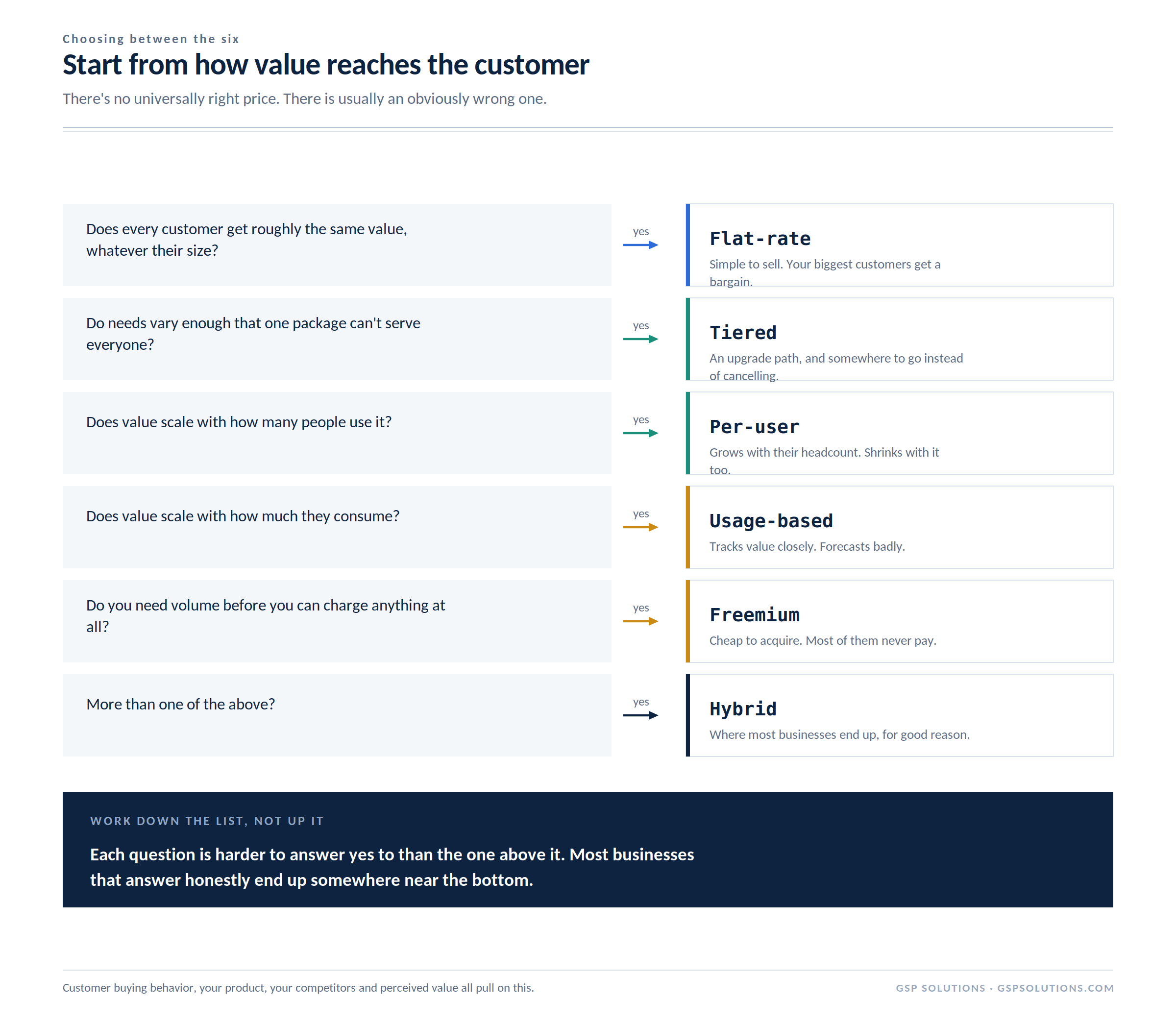
There’s no universal “right” price or model. The best fit depends on customer buying behavior, your product, your competitors, and how customers perceive the value you deliver.
Setting your price is one of the most consequential decisions a recurring revenue business makes. It shapes how easily you acquire new customers, how long they stay, how much they spend over time, and ultimately your profit margin.
Unlike a one-time purchase, recurring pricing has to keep earning its place in the customer’s budget every single billing period — so it needs to reflect real, ongoing value, not just what the market will bear at the point of sale.
The article explores the six core recurring revenue pricing models — their advantages and tradeoffs — along with the tactics you can use to refine them.
Recurring Revenue Pricing Models at a Glance
| Flat-rate | One fixed fee for full access, regardless of usage | Simple to sell and to buy; predictable revenue; straightforward billing | Larger customers get disproportionate value, little pricing flexibility, and expansion is hard |
| Tiered | Multiple levels, with features, usage limits, or support rising at each level | Appeals to a wider range of customers; clear upgrade path; longer customer lifetimes | Added complexity; risk of downgrades; the feature split between tiers is hard to get right |
| Per-user | Charged by the number of people using the product | Easy to understand; revenue grows as the customer's team grows; expansion through extra seats | Customers ration seats; it does not encourage company-wide adoption |
| Usage-based | Charged by consumption: API calls, storage, processing time, transactions | Price tracks the value delivered; low entry cost widens the audience; scales as customers grow | Less predictable monthly revenue; harder for customers to budget; complex billing logic |
| Freemium | Free entry tier, upgrading to paid once the value is clear | Low-friction acquisition; less reliance on a sales team; no financial risk to try | No guaranteed revenue from free users; gating decisions are hard; needs high volume to bring enough revenue |
| Hybrid | A fixed element plus a variable one, for example, a platform fee plus per-user charges | Flexible; multiple routes to revenue growth; fits organizations of any size. | Harder to understand at a glance; billing and invoicing are more complex to administer. |
1. Flat-Rate Pricing
Flat-rate pricing is the simplest model: everyone pays the same fixed monthly fee, regardless of usage, and gets full access to the product. Amazon Prime is the classic example, alongside gym memberships and many subscription box services.
Advantages: Simple for customers, easy to sell, predictable revenue, straightforward billing.
Trade-offs: Larger customers get disproportionately more value for the same price, there’s less pricing flexibility, and expanding revenue from existing customers is harder.
This model suits businesses that deliver broadly the same value to every customer, regardless of size.
2. Tiered Pricing
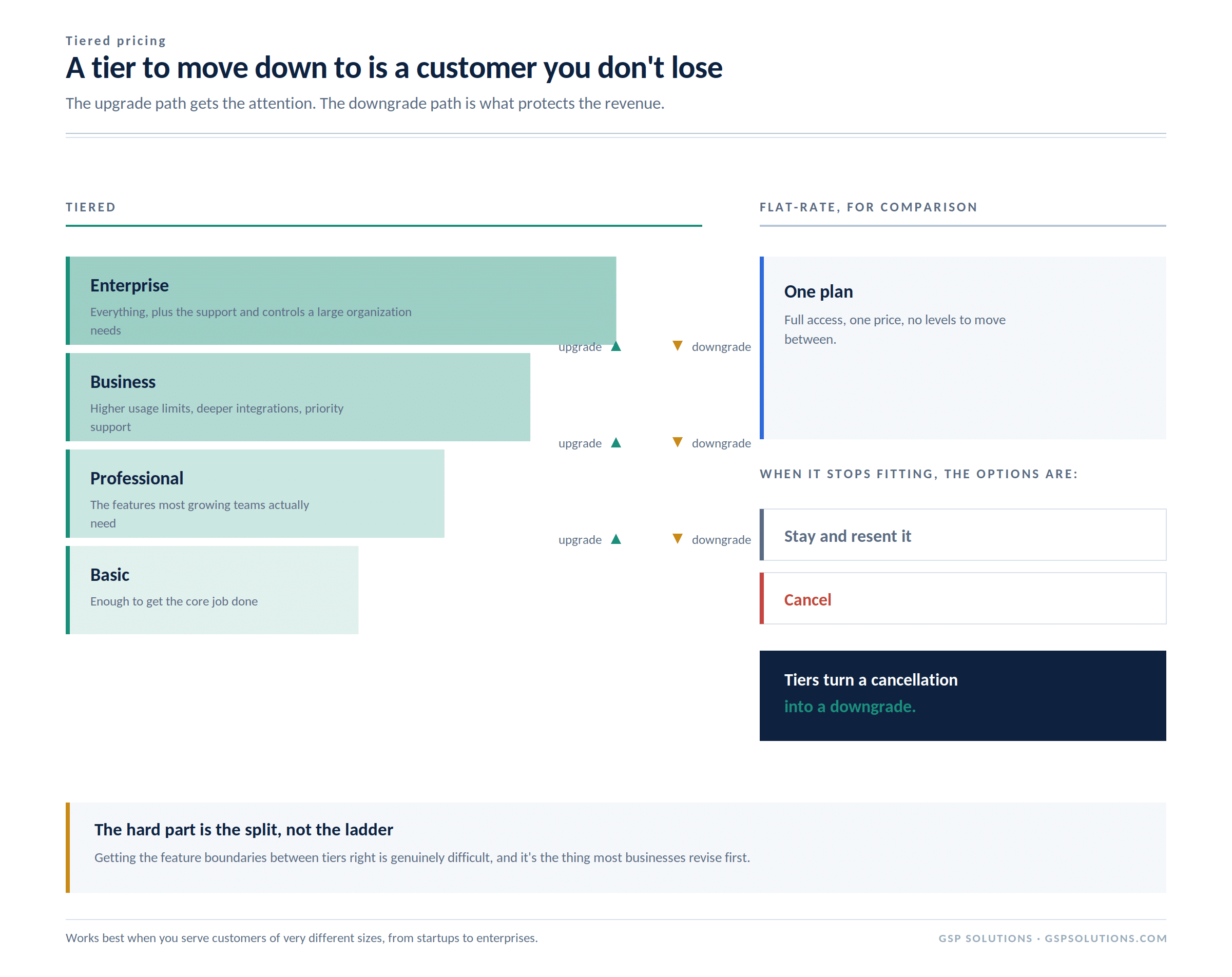
With tiered pricing, customers choose from multiple pricing levels — typically basic, professional, business, and enterprise — with features, usage limits, or support increasing at each tier. Customers can upgrade or downgrade as their needs change.
Advantages: Appeals to a wider range of customers, provides a clear upgrade path, creates revenue growth opportunities, and produces longer customer lifetimes. Instead of canceling outright, customers can move to another tier that better suits their needs.
Trade-offs: Pricing complexity increases, there’s a risk of downgrades, and setting the right feature split between tiers is genuinely difficult.
Tiered pricing works best for businesses serving customers with varying sizes and needs, such as many SaaS companies that cater to customers ranging from startups to enterprises.
3. Per-User Pricing
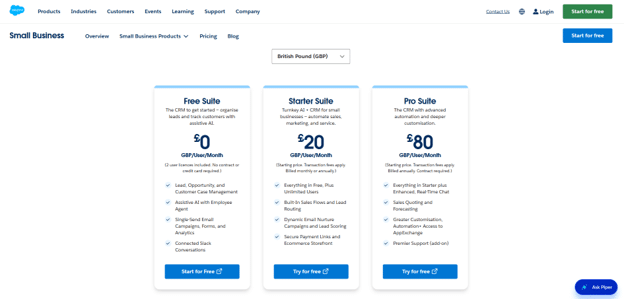
In per-user pricing, you charge customers based on the number of people using the product — a common model for software sold to teams and departments, like Salesforce.
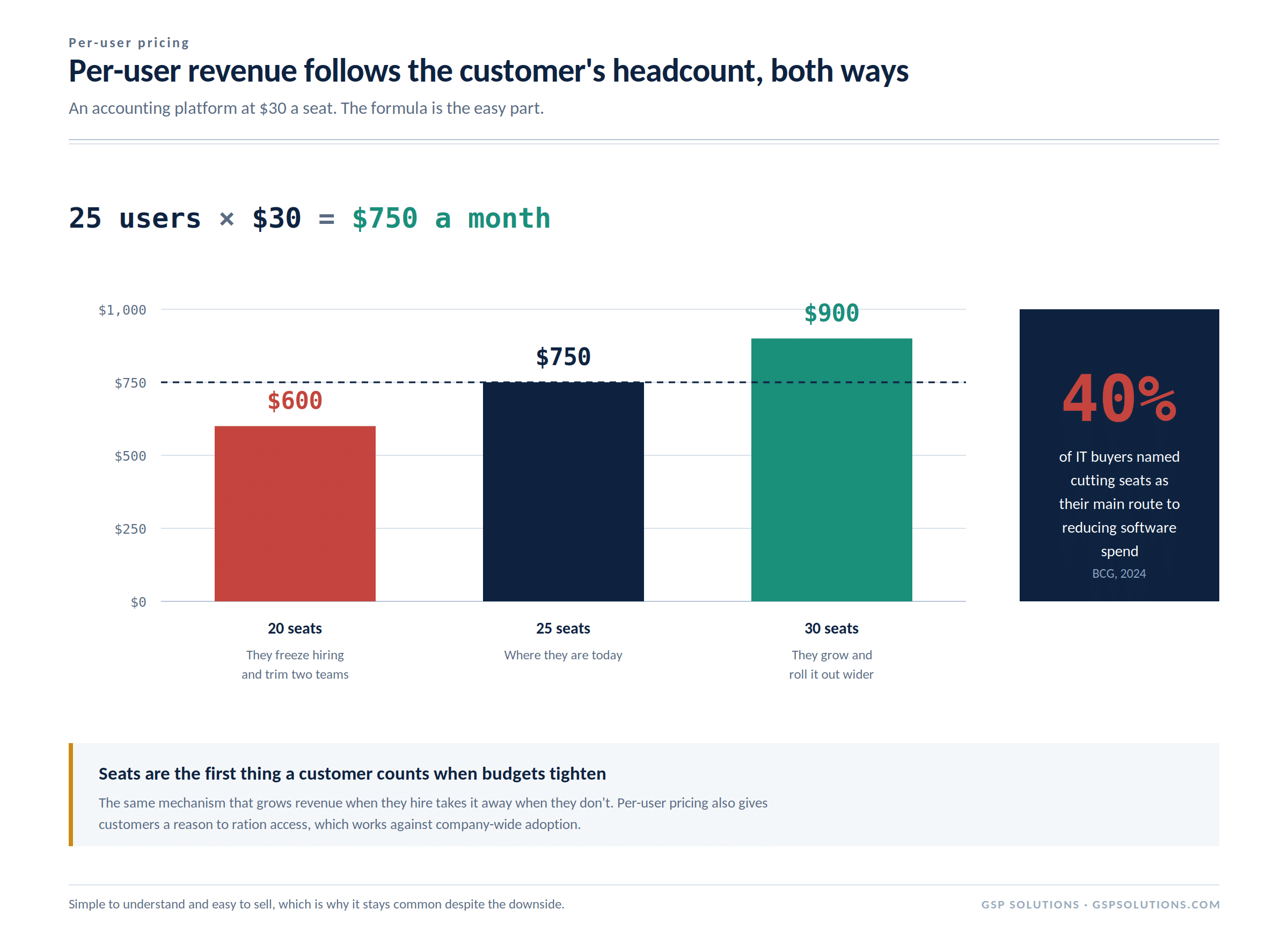
Formula: Monthly cost = number of users × price per user. An accounting platform charging $30 per user, with 25 users on the account, comes to $750 per month.
Advantages: Simple to understand, revenue grows naturally as the customer’s team grows, produces stable recurring revenue, and encourages expansion through additional seats.
Trade-offs: Customers are often cautious about adding users (40% of respondents in BCG’s 2024 IT buying survey cited seat reductions as the primary way to reduce software spending), and it doesn’t naturally encourage company-wide adoption.
4. Usage-Based Pricing
Usage-based pricing, or consumption-based pricing, charges customers based on how much they actually use — API calls, data storage, processing time, or the number of transactions.
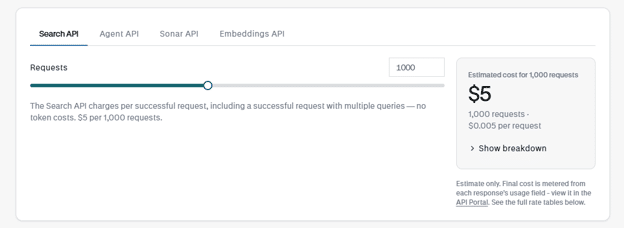
For example, DataForSEO or Perplexity charges for API requests.
Advantages: Pricing is directly tied to the value customers derive; entry costs are low, making the product accessible to a wider audience; and revenue scales naturally as the customer base grows.
Trade-offs: Monthly revenue is less predictable, customers can find it harder to budget for, and billing logic is more complex to build and explain.
This model works best where consumption is genuinely central to how customers perceive value.
5. Freemium
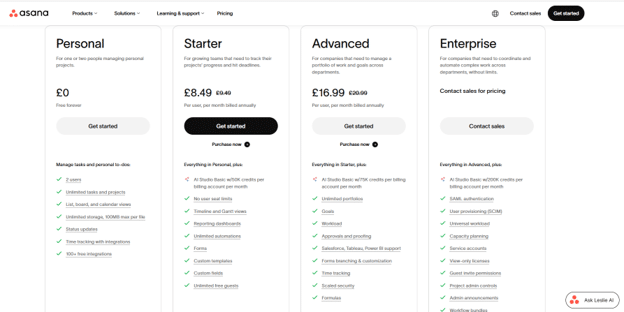
In a freemium model, customers start on a free tier and upgrade to a paid plan (premium) once they see enough value to justify the upgrade. Many project management and planning tools, such as Asana and Trello, use this model to acquire large numbers of customers.
Advantages: Low-friction customer acquisition, less reliance on a sales team, and a strong incentive for customers to try the product with no financial risk.
Trade-offs: No guaranteed revenue from free users (who still require your support and resources), deciding exactly what to gate behind the paywall is difficult, and since only a small share ever upgrades, the model needs a large free base before the paying minority adds up to a viable business.
6. Hybrid Pricing
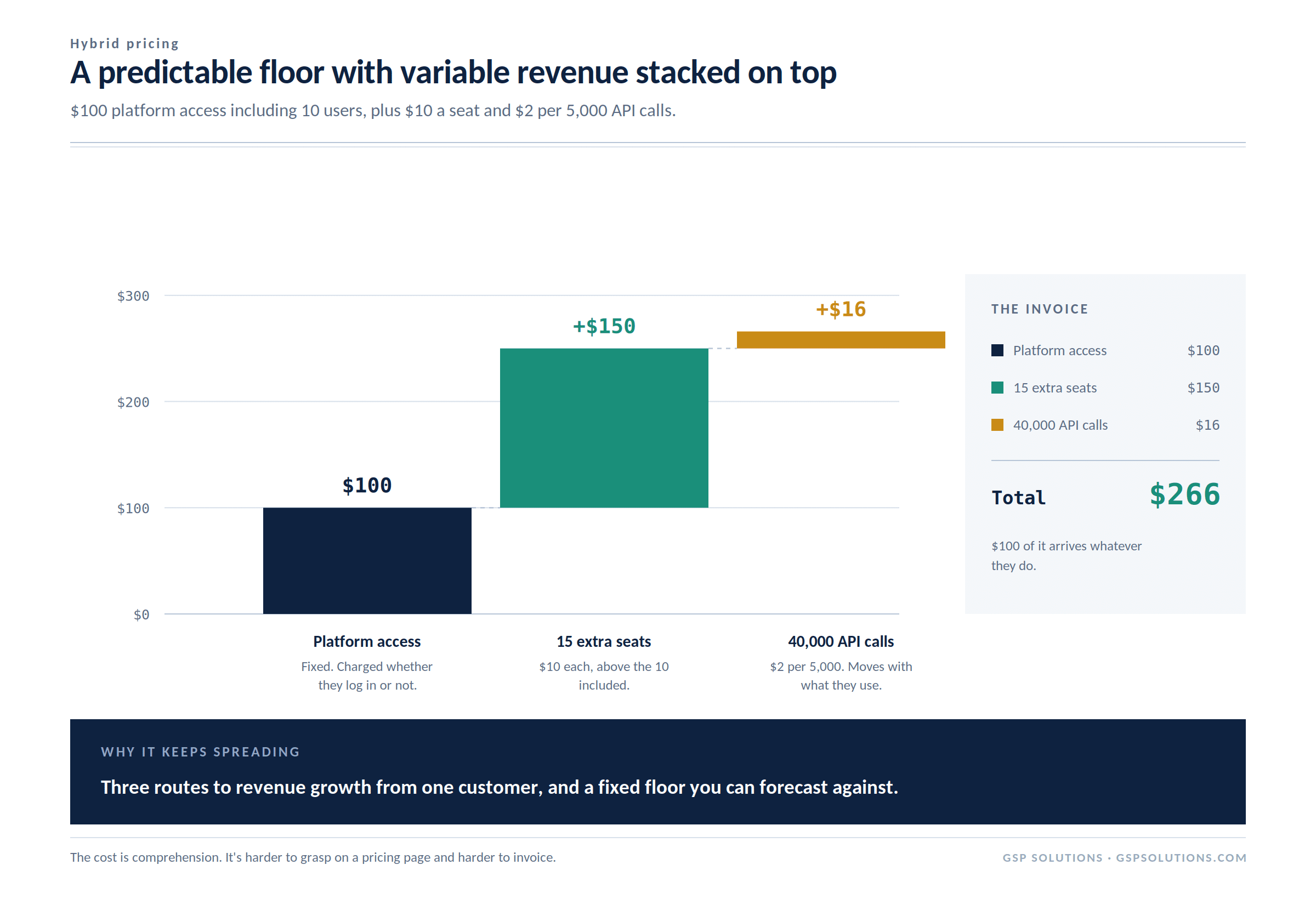
Increasingly common, hybrid pricing combines a fixed element (flat-rate or tiered) with a variable element (per-user or usage-based). For example, $100 for platform access, including 10 users, plus $10 per additional user and $2 per 5,000 external API calls.
Advantages: Flexible, opens multiple avenues for revenue growth, and can be tailored to organizations of any size.
Trade-offs: Harder for customers to understand at a glance, and billing and invoicing become more complex to administer.
What Pricing Tactics Can You Layer On?
Beyond choosing a core model, a handful of tactics consistently improve how that pricing performs:
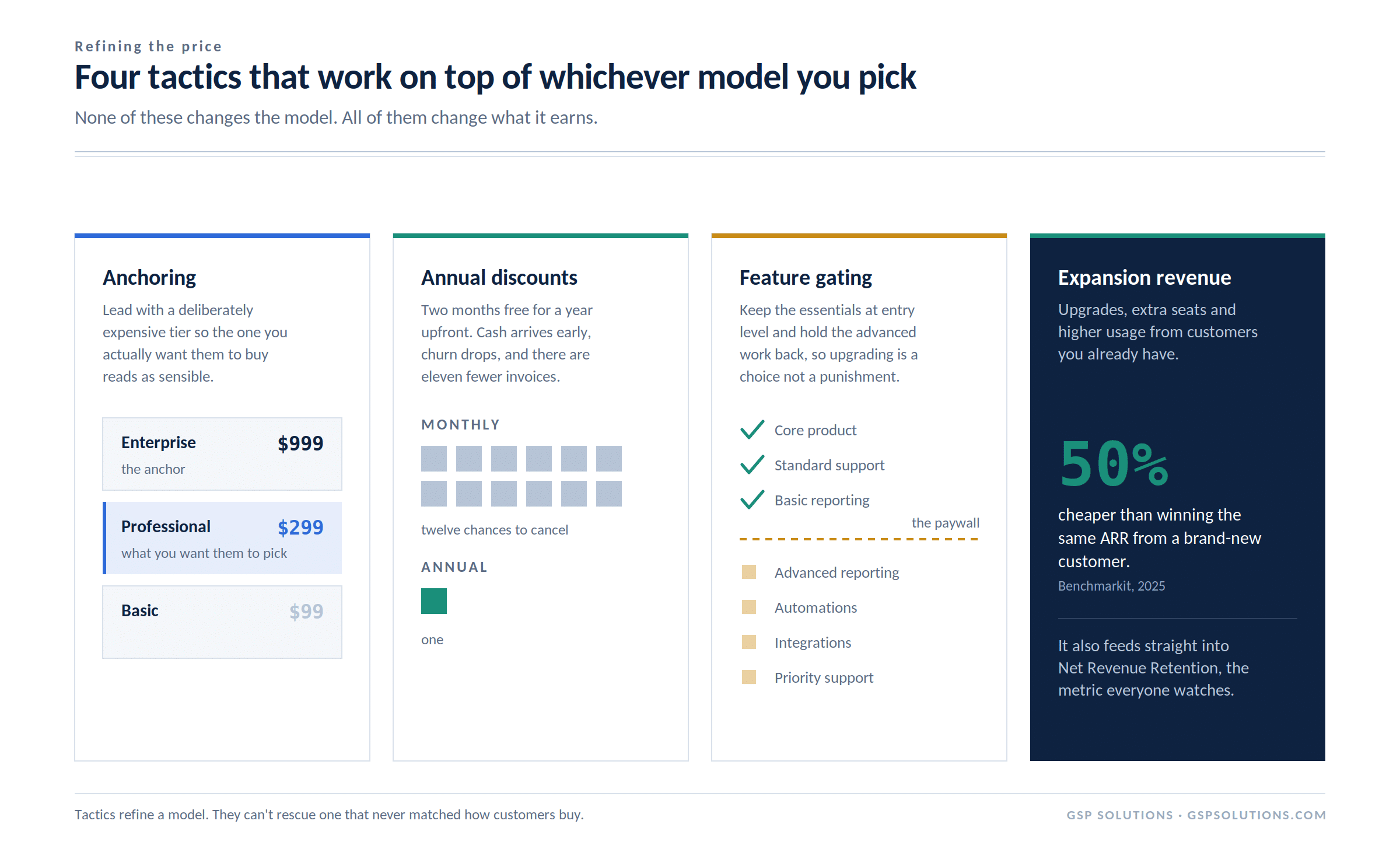
- Anchoring — leading with a deliberately high-priced tier (Enterprise) makes the mid-tier (Professional) look like the sensible, realistic choice, even though it’s the option you actually want most customers to buy.
- Annual discounts — offering a modest discount for an annual commitment (say, two months free versus paying monthly) improves cash flow through upfront payment, reduces churn, and cuts the number of invoices you need to send.
- Feature gating — reserving advanced functionality (reporting, automations, integrations, higher support tiers) for higher-priced plans, while keeping the essentials available at the entry level, creates a natural upgrade path without frustrating your lowest-tier customers.
- Expansion revenue — revenue generated from existing customers upgrading, adding users, or increasing usage. Growing ARR this way is 50% cheaper than acquiring a brand-new customer (in SaaS, according to Benchmarkit, 2025). And it feeds directly into Net Revenue Retention, one of the most closely watched recurring revenue metrics.
How Do You Recognize Pricing Misalignment?
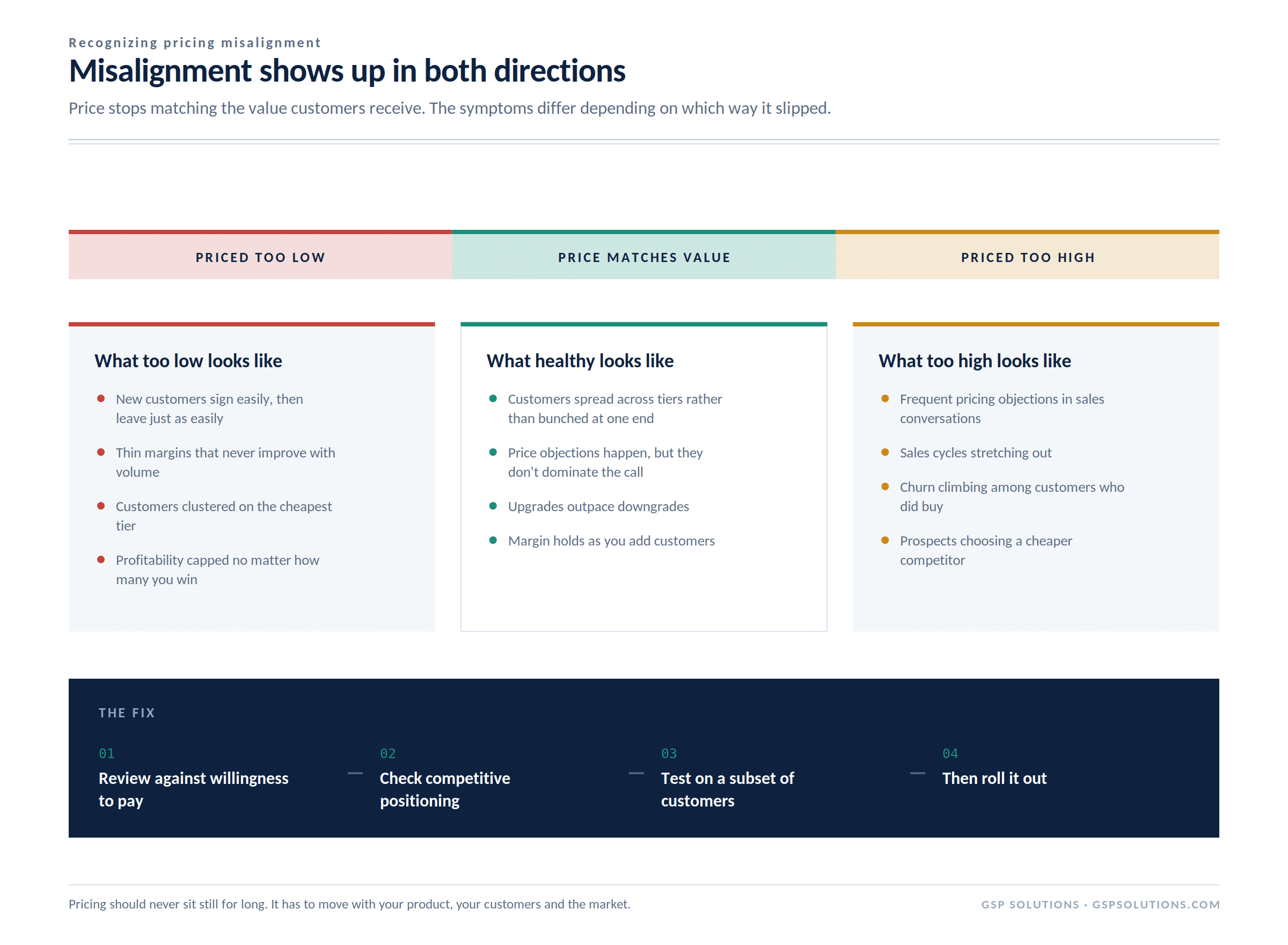
Common warning signs of pricing misalignment include high volumes of new customers alongside high churn, frequent pricing objections, thin margins, and customers clustering on your cheapest tier.
Pricing misalignment occurs when what customers pay no longer reflects the value they receive — in either direction. A price that’s too high produces longer sales cycles and higher churn; a price that’s too low erodes profitability.
The fix is to review pricing regularly against customer willingness to pay, competitive positioning, and the value your product delivers, and test changes with a subset of customers before rolling them out fully.
Pricing should never stay static for long; it needs to move with your product, your customers’ perceived value, and the wider market.
Choosing the Right Pricing Strategy
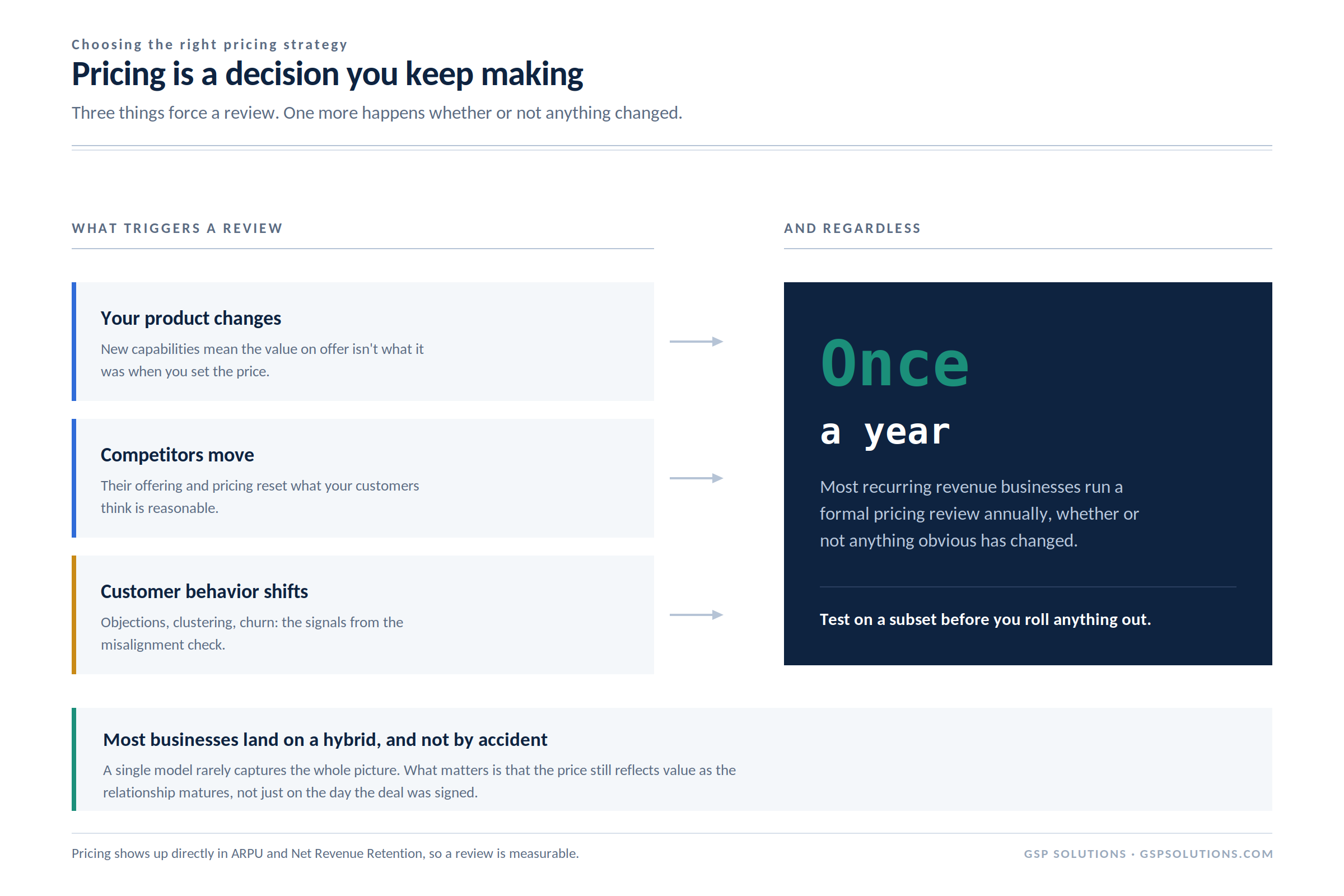
Setting the right price requires understanding your customers’ buying behavior, your competitors, and the value you deliver.
Many recurring revenue businesses land on a hybrid approach precisely because a single model rarely captures the full picture. What matters most is that the price continues to reflect value as the relationship matures, not just at the moment the deal is signed.
Getting pricing right feeds directly into two other areas covered in this series: it’s one of the biggest levers in strategies to increase recurring revenue, and it shows up directly in your key recurring revenue metrics, particularly Net Revenue Retention and ARPU.
FAQs
There is no single pricing strategy that works for every business. That’s why many successful recurring revenue businesses combine multiple pricing models, such as tiered pricing with per-user or usage-based charges, to balance predictable revenue with growth opportunities.
The best approach depends on your product, target market, customer buying behavior, and how customers receive value from your solution.

