

9 Best Strategies to Increase Recurring Revenue
Discover 9 top strategies to increase your recurring revenue. Learn how to retain customers and expand their accounts to create a reliable recurring revenue stream.
Last updated November 2, 2026

In This Guide
Businesses grow recurring revenue by winning new customers and expanding existing accounts.
Acquiring new customers is important, but retaining, upselling, and expanding your existing base is almost always cheaper and more reliable than replacing lost customers with new ones.
Recurring revenue compounds: every month a customer stays, both Monthly Recurring Revenue and their lifetime value increase. That’s why the strongest recurring revenue businesses put as much weight on retaining and growing existing accounts as they do on new logos. Here are the strategies that move the needle most.
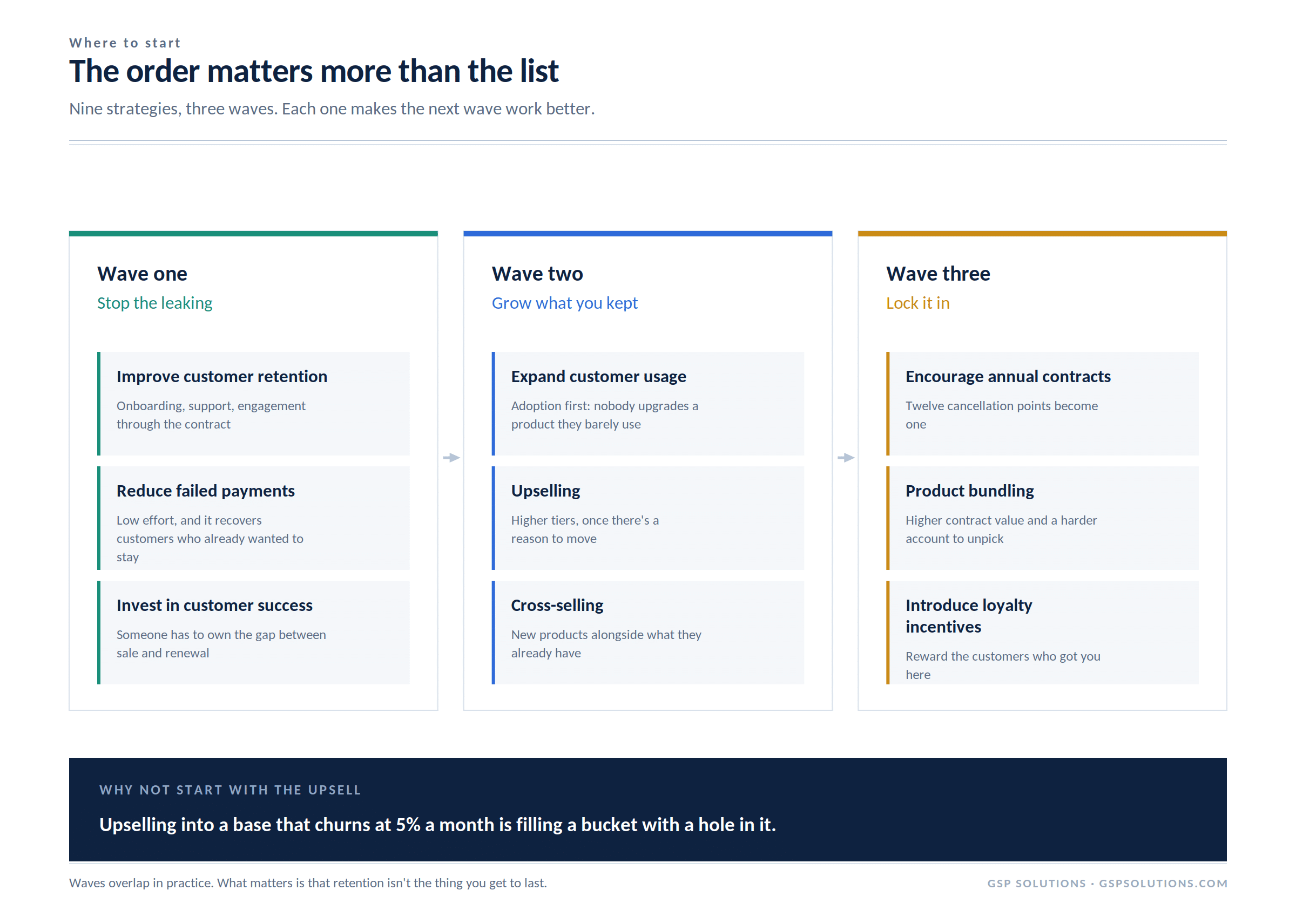
The best strategies to increase recurring revenue include:
- Improving customer retention
- Upselling
- Cross-selling
- Promoting annual contracts
- Product bundling
- Investing in customer success
- Introducing loyalty incentives
- Expanding customer usage
- Reducing failed payments
The article explains how these strategies work and why they’re effective.
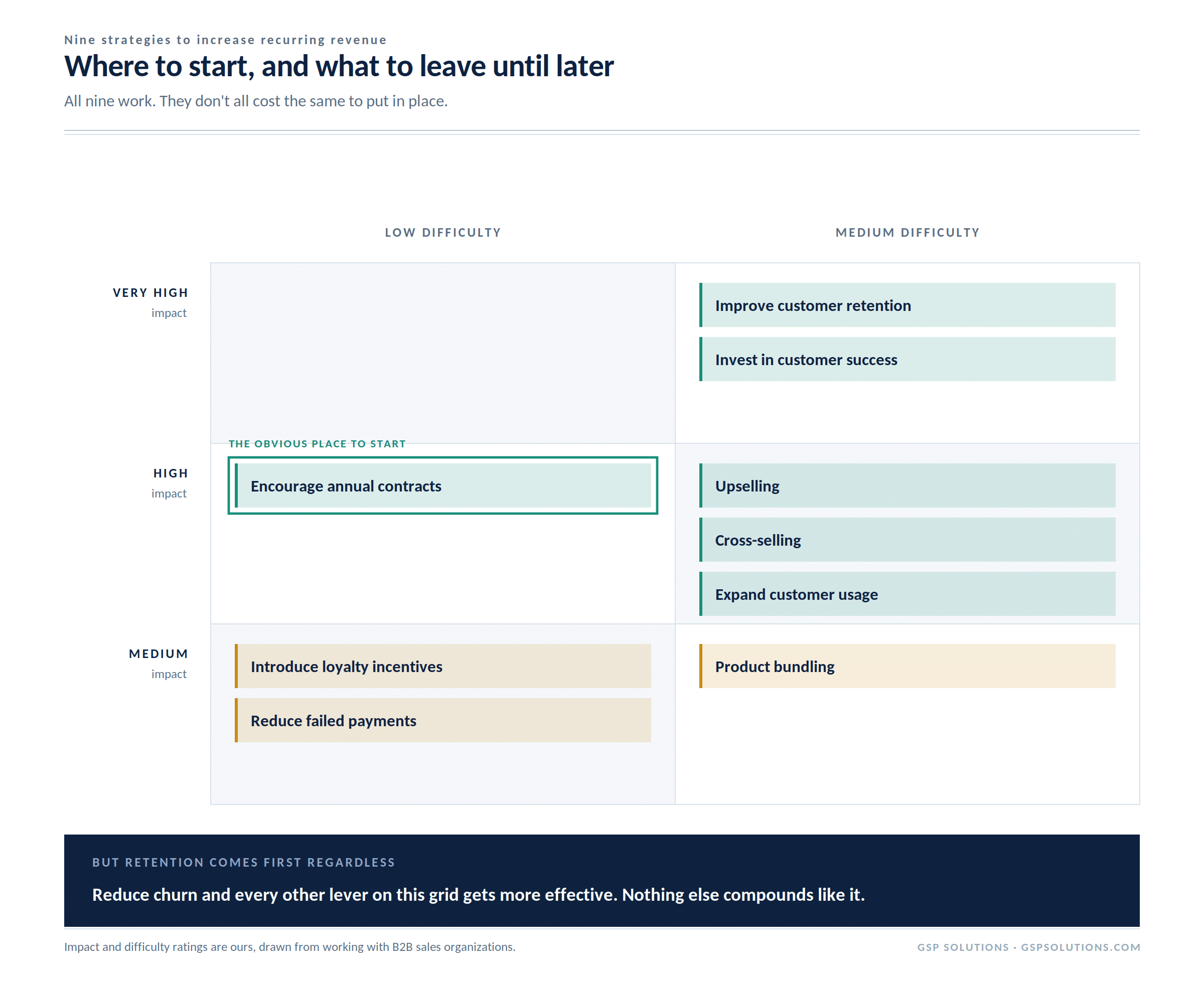
Top Strategies For Increasing Recurring Revenue at a Glance
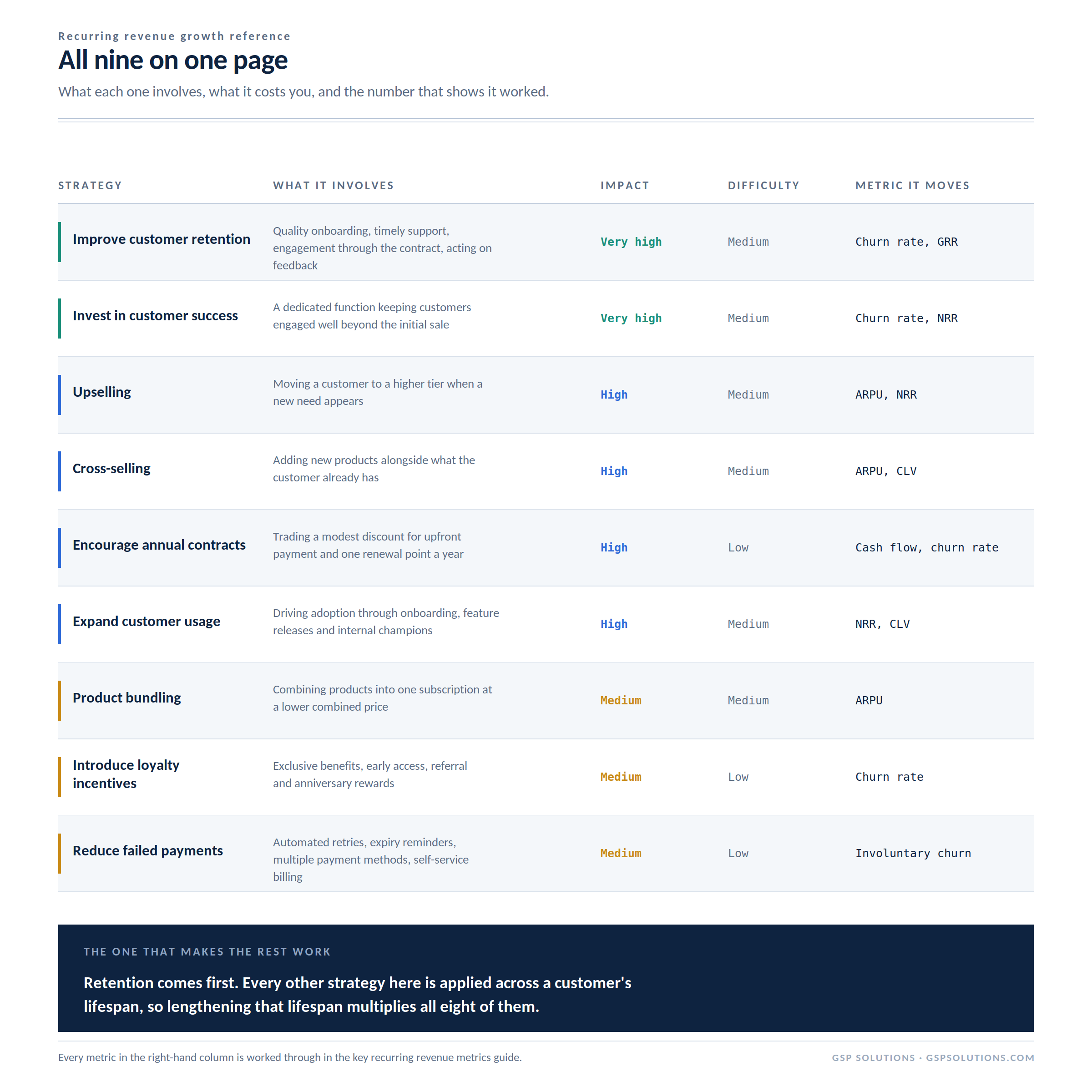
Too busy to read? Here’s the overview of the 9 strategies, their impact, and implementation difficulty.
| Improve customer retention | Quality onboarding, timely support, engagement throughout the contract, and acting on feedback | Very high | Medium |
| Upselling | Moving a customer to a higher tier or plan when a new need appears | High | Medium |
| Cross-selling | Adding new products alongside what the customer already has | High | Medium |
| Encourage annual contracts | Trading a modest discount for upfront payment and one renewal point a year instead of twelve | High | Low |
| Product bundling | Combining products into a single subscription at a lower combined price | Medium | Medium |
| Invest in customer success | A dedicated function keeping customers engaged well beyond the initial sale | Very high | Medium |
| Introduce loyalty incentives | Exclusive benefits, early access, discounted upgrades, referral, and anniversary rewards | Medium | Low |
| Expand customer usage | Driving adoption through onboarding, feature releases, and internal champions | High | Medium |
| Reduce failed payments | Automated retries, card expiry reminders, multiple payment methods, and self-service billing | Medium | Low |
1. Improve Customer Retention
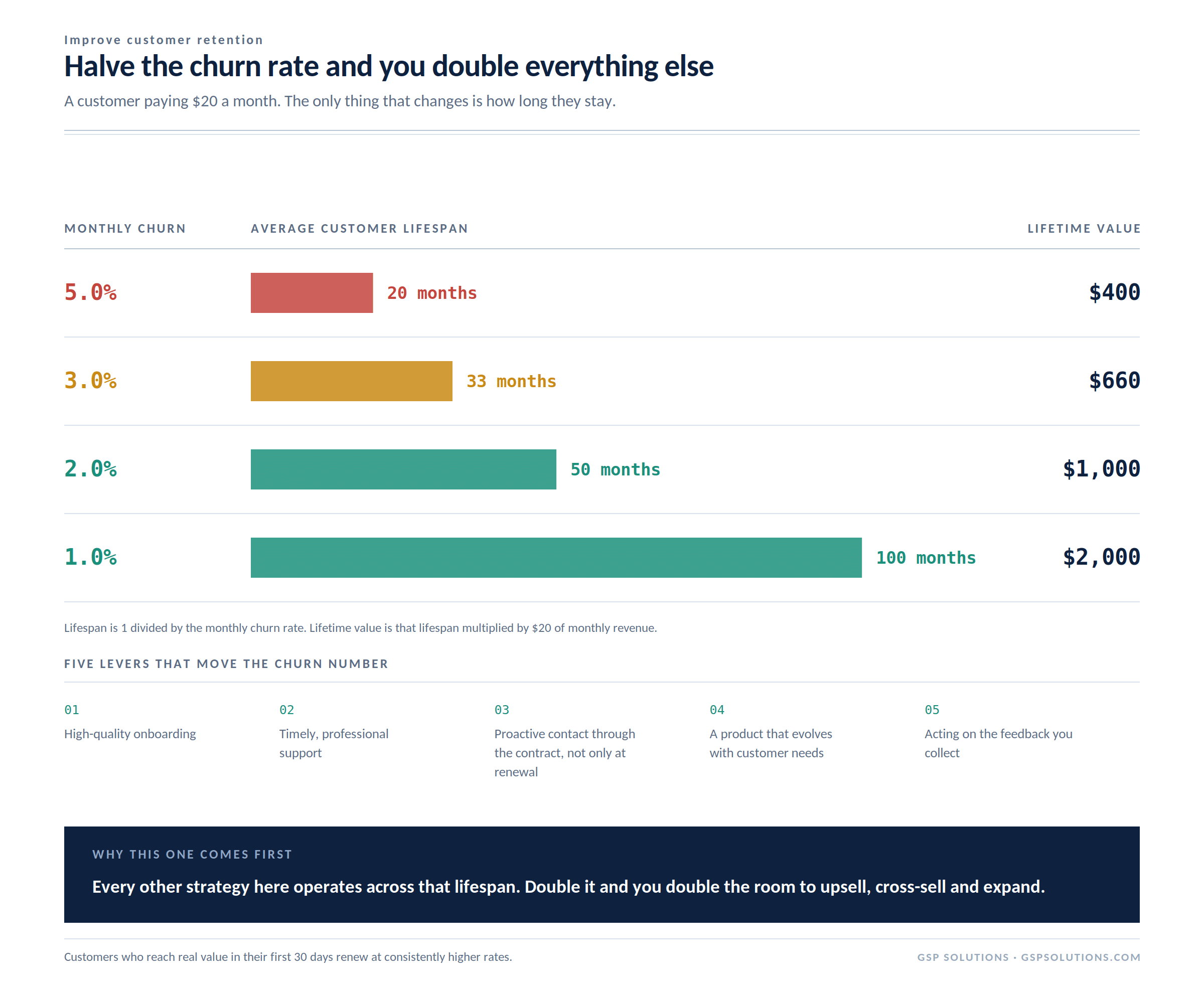
Retention is the foundation of everything else in this list — reduce churn, and every other growth lever becomes more effective.
Practical levers to increase customer retention include:
- High-quality onboarding
- Timely and professional support
- Proactive engagement with customers throughout the contract (not only at renewal)
- Evolving the product to match customer needs
- Acting on customer feedback.
Businesses that help customers realize real value within their first 30 days consistently see stronger renewal rates than those that leave onboarding and early support light-touch.
The payoff for good retention shows up directly in customer lifetime value, healthier margins, and a more stable revenue base overall.
2. Upselling
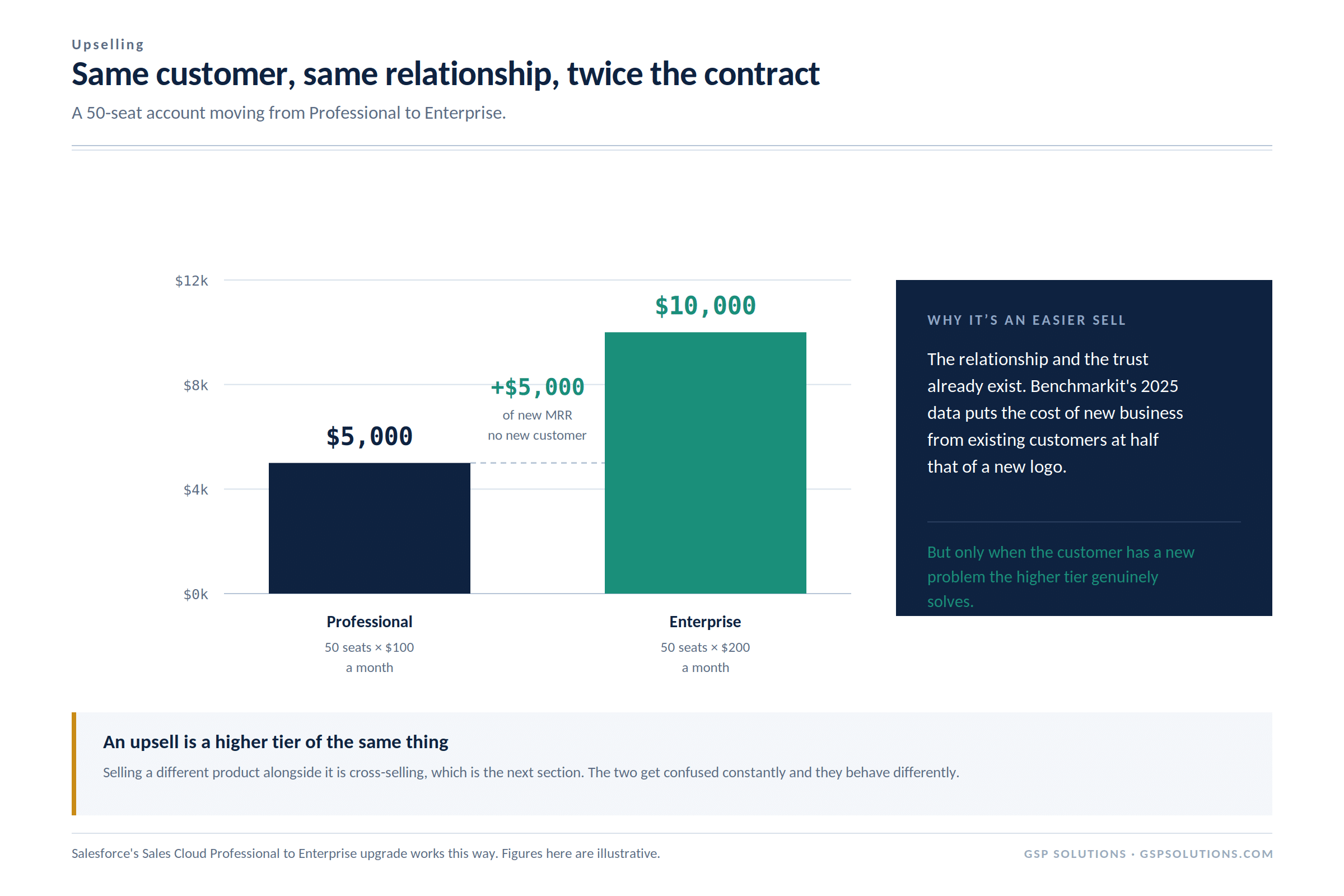
Upselling moves an existing customer to a higher-value product or plan—for example, a basic-to-premium upgrade, an add-on purchase, or a higher support tier.
Salesforce's upgrade from Sales Cloud Professional to Enterprise is a good example of upselling because it doubles the per-user cost in exchange for deeper functionality.
It’s an easier sell than winning a brand-new customer, because the relationship and trust already exist. Benchmarkit’s data (2025) shows that acquiring new business from existing customers costs half as much as acquiring new ones. Typically, $2 for new customers and $1 for existing customers.
The strongest upsell opportunities arise when a customer faces a new challenge that a higher tier can genuinely solve.
3. Cross-Selling
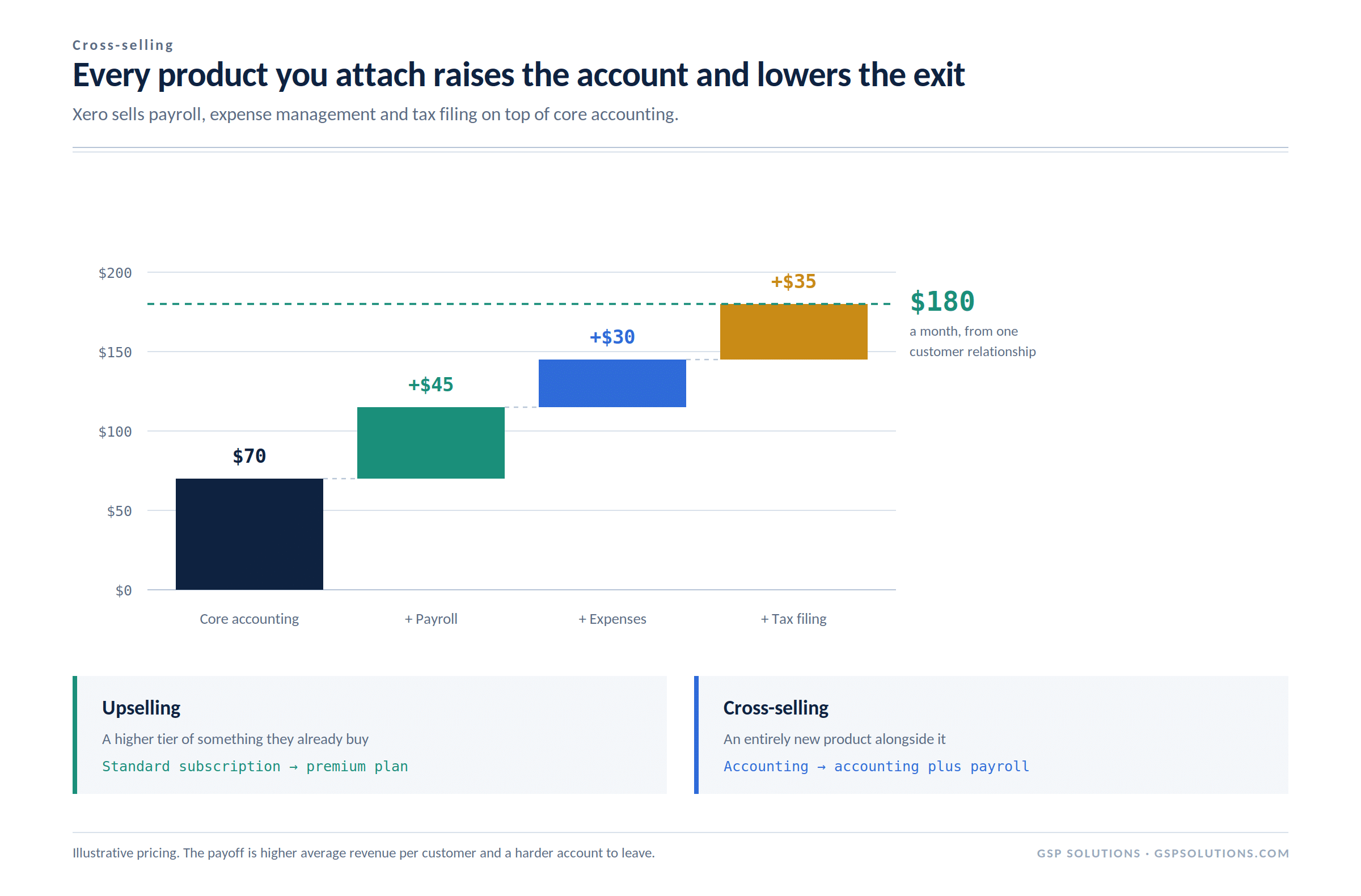
Cross-selling is selling entirely new products alongside what a customer already has, such as support contracts, extended warranties, training, additional apps, or consultancy services.
Xero, for example, sells payroll, expense management, and tax filing on top of its core accounting platform.
Done well, cross-selling increases average customer revenue, deepens loyalty, lifts customer lifetime value, and improves overall profitability — all from customers you’ve already won.
4. Encourage Annual Contracts
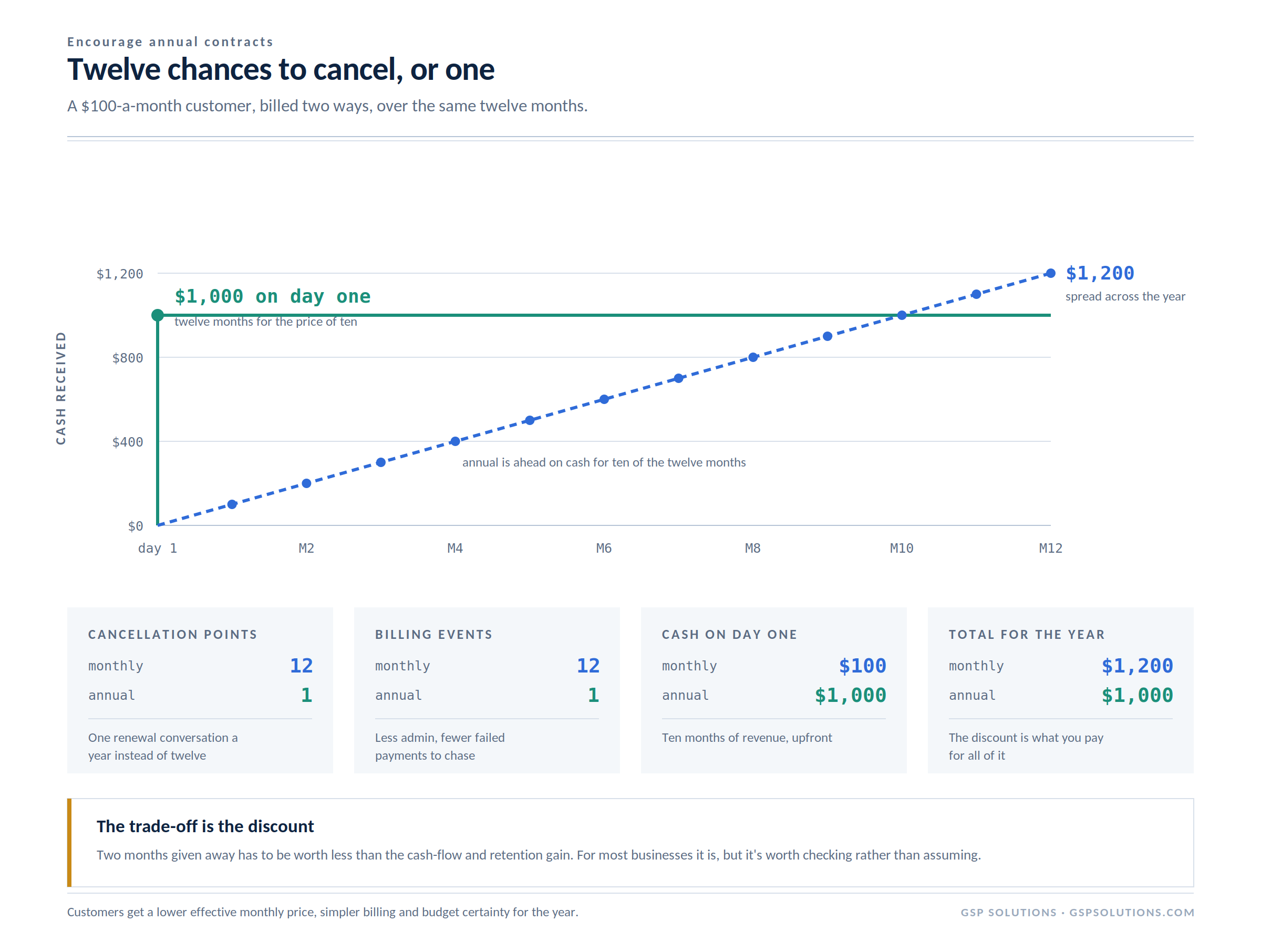
Moving customers from monthly to annual contracts improves cash flow from upfront payment, provides greater revenue predictability, reduces billing overhead, and creates fewer opportunities for cancellation (one renewal point per year, rather than twelve).
As annual billing requires greater commitment than monthly billing, companies typically offer a discount as an incentive. For example, many SaaS businesses offer 12-month subscriptions for the price of ten months.
So, customers benefit too through a lower effective monthly price, simpler billing, and budget certainty for the year ahead.
The trade-off to manage is ensuring the discount offered doesn’t erode profitability beyond what the cash-flow and retention benefits justify.
5. Product Bundling
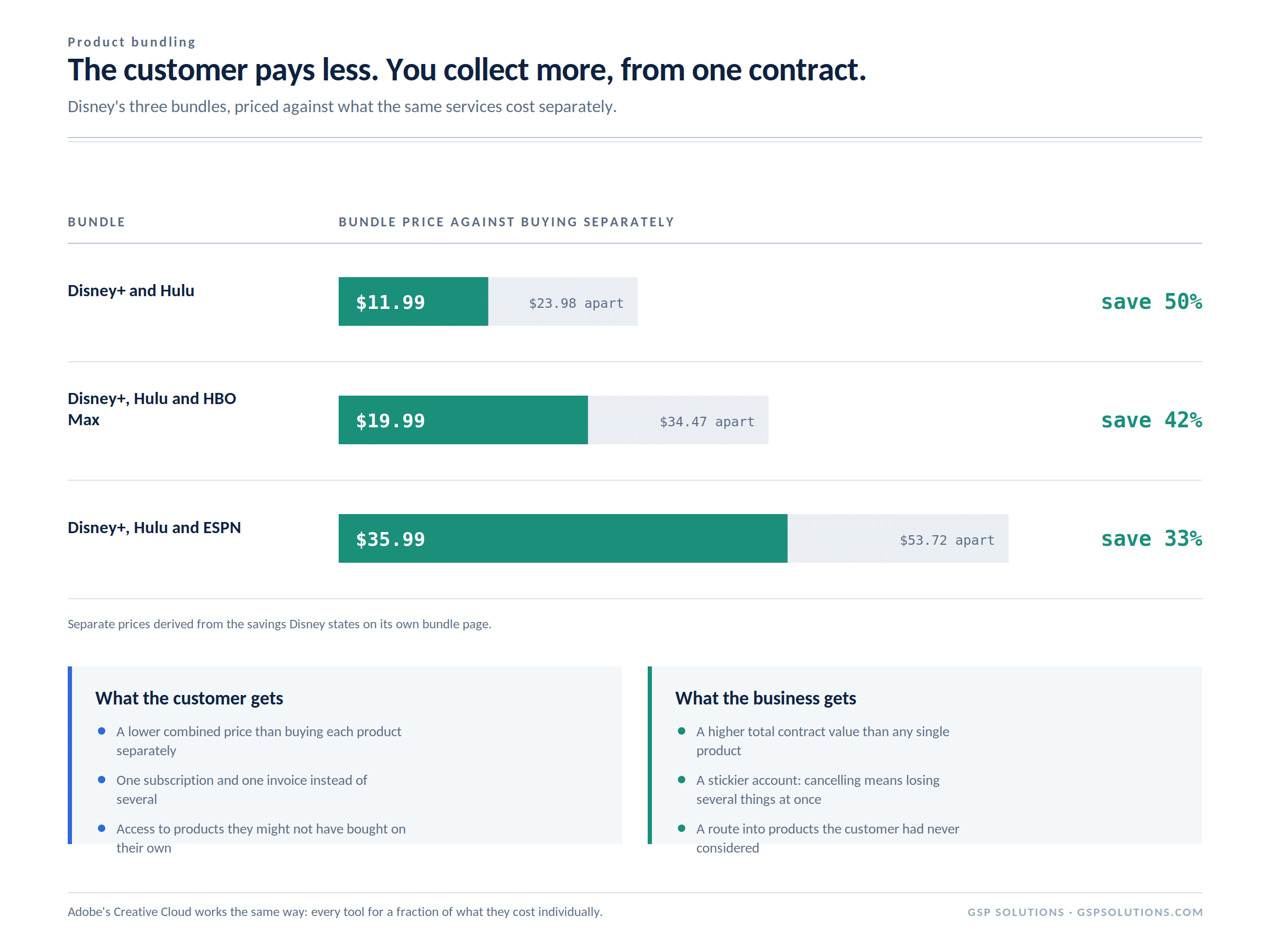
Bundling combines multiple products into a single subscription, typically at a lower combined price than buying each separately.
For example, Adobe bundles all its tools into its Creative Cloud subscription, which costs a fraction of what you’d pay for each separately. Disney+ offers multiple bundles, such as with Hulu or ESPN, which cost 33-50% more than individual subscriptions.

Customers see it as a better value; the business benefits from a higher overall contract value and a stickier relationship, since canceling means losing access to several products at once.
6. Invest in Customer Success
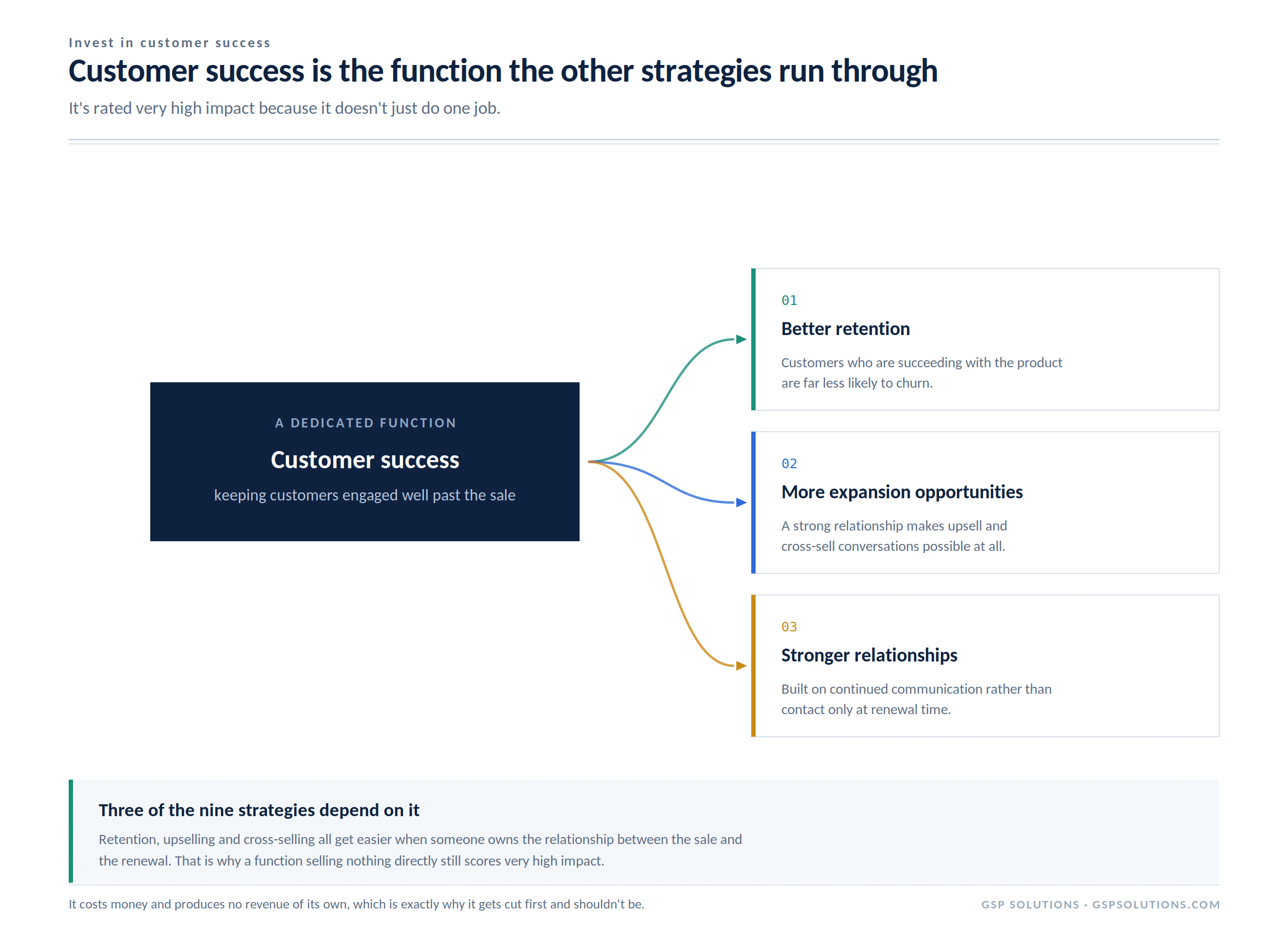
A dedicated customer success function keeps customers engaged throughout their contract, well beyond the point of initial sale.
It pays off in three ways:
- better retention, because customers who are succeeding with the product are far less likely to churn;
- more upsell and cross-sell opportunities, because a strong relationship makes it easier to have those conversations;
- stronger customer relationships more generally, built on continued, genuine communication rather than contact only at renewal time.
7. Introduce Loyalty Incentives
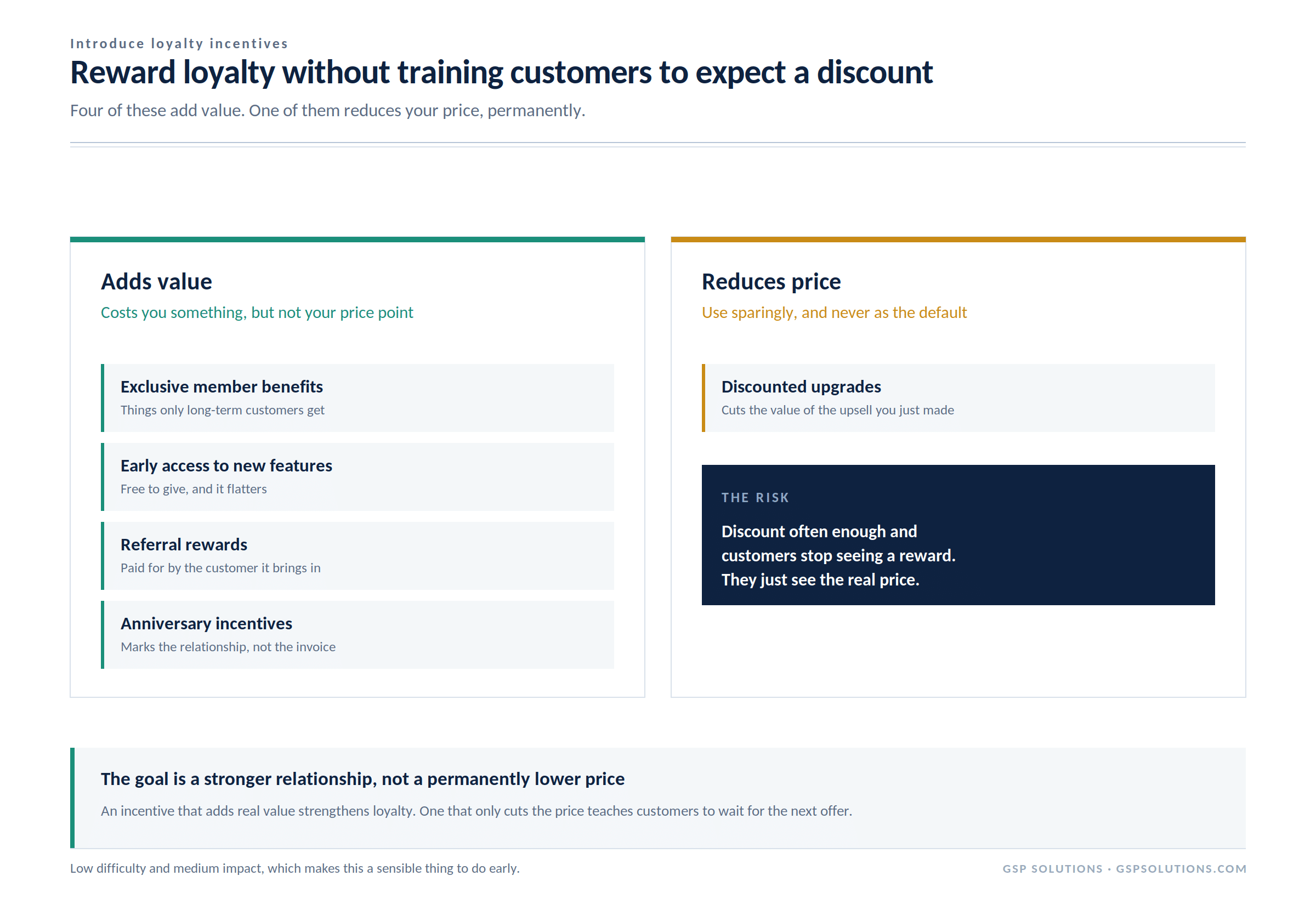
Rewarding long-term customers strengthens loyalty and reduces the temptation to look elsewhere — provided the incentives add real value rather than simply training customers to expect a discount.
Effective options include:
- Exclusive member benefits
- Early access to new features
- Discounted upgrades
- Referral rewards
- Anniversary incentives
The goal is to strengthen the relationship, not to discount your product permanently.
8. Expand Customer Usage
Increasing adoption through clear onboarding, regular feature releases, strong product visibility, and internal champions who advocate for you within the customer’s organization all help drive usage, which translates into higher retention and, consequently, more revenue.
The more a customer uses your product, the less likely they are to cancel.
The payoff is higher Net Revenue Retention, more expansion opportunities, and increased customer lifetime value.
9. Reduce Failed Payments
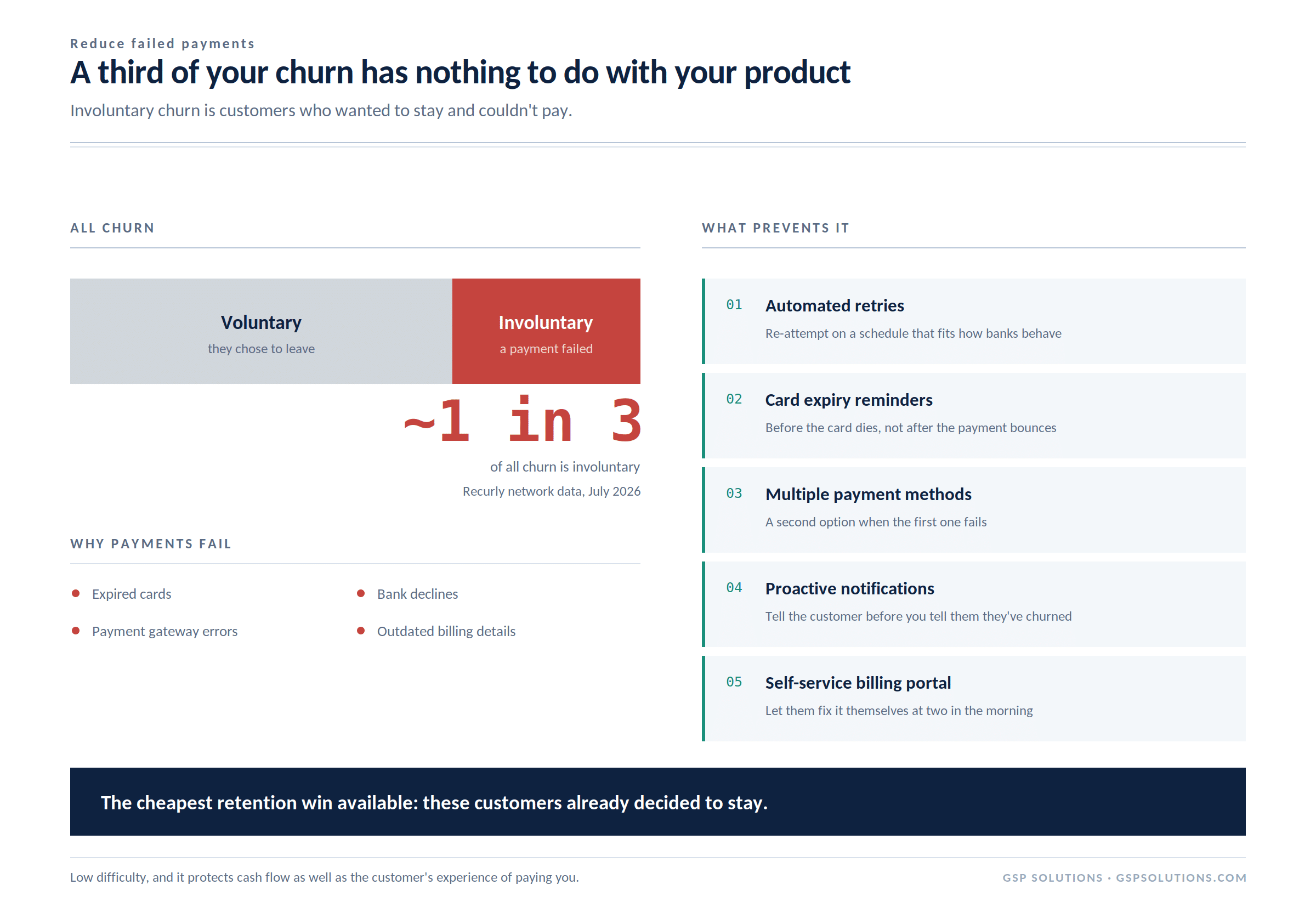
Failed payments are a cause of involuntary churn, which accounts for roughly a third of all churn (Recurly, July 2026). Common causes of failed payments include expired cards, bank declines, payment gateway errors, or outdated billing details.
You can prevent it with automated payment retries, card expiry reminders, multiple payment methods, proactive notifications, and self-service billing portals.
By reducing the risk of payment failures, these solutions protect cash flow and improve the customer’s payment experience.
Sustainable Growth Comes From Existing Customers
New business is essential, but it’s of limited use if you can’t hold onto the customers you already have. Long-term, sustainable growth is built by maximizing the value of your existing base through retention and expansion.
A healthy recurring revenue business creates a virtuous cycle: satisfied customers stay longer, spend more over time, and become advocates who help you win new business — all of which feeds a predictable, compounding revenue stream.
For the metrics that show whether these strategies are working, see key recurring revenue metrics; for the pricing tactics that support several of them, see pricing strategies for recurring revenue.
FAQs
The fastest way to increase recurring revenue is by growing revenue from existing customers rather than by acquiring new ones.
Upselling, cross-selling, encouraging annual contracts, and improving customer retention all generate additional recurring revenue more quickly and at a lower cost than winning brand-new customers.
