

How to Build a Recurring Revenue Business in Six Steps
Discover our 6-step framework for building a recurring revenue business. Find an ongoing problem to solve and build systems around the solution.
Last updated October 22, 2026

In This Guide
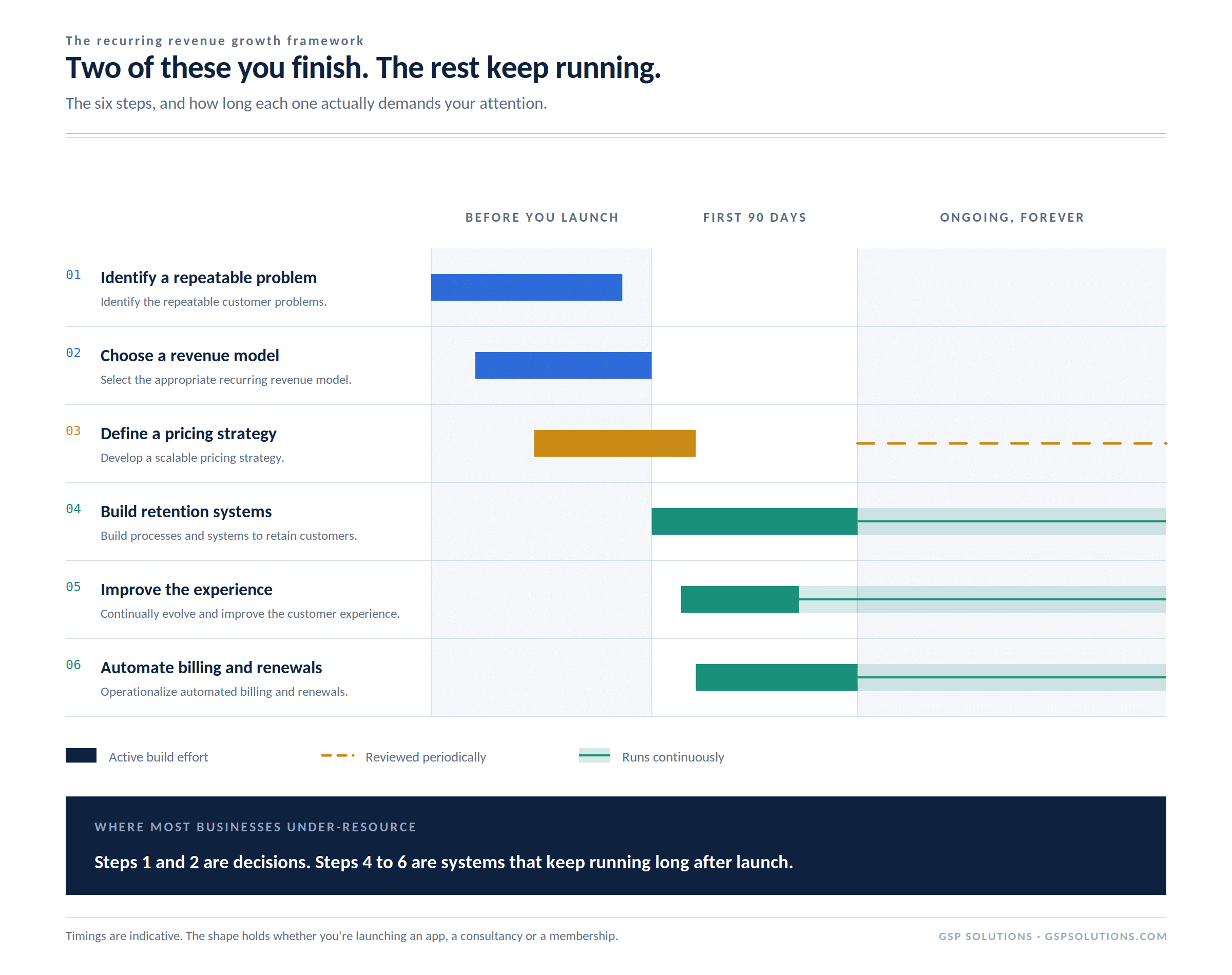
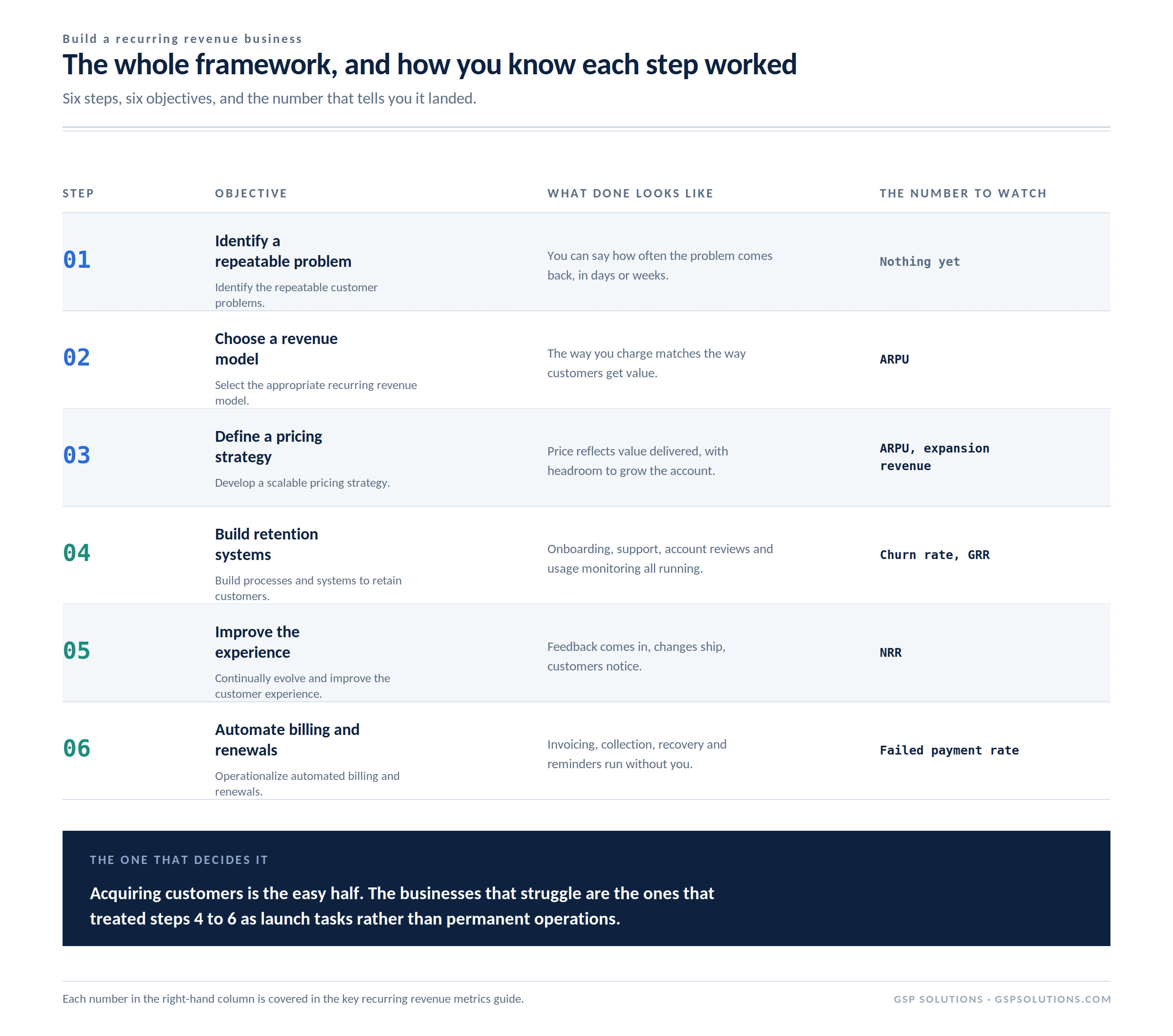
We’ve broken the process of building a recurring revenue business into 6 practical steps:
Step 1: Identify a repeatable customer problem
Step 2: Choose a revenue model
Step 3: Define a pricing strategy
Step 4: Build retention systems
Step 5: Improve the customer experience
Step 6: Automate billing and renewals
Whether you’re launching an app, a consultancy, an e-commerce website, or a membership offering, the foundations are the same.
In the article, we look at each step in detail and provide practical advice to help you turn your business into a recurring revenue engine.
The Recurring Revenue Growth Framework
| 1 | Identify the repeatable customer problems. |
| 2 | Select the appropriate recurring revenue model. |
| 3 | Develop a scalable pricing strategy. |
| 4 | Build processes and systems to retain customers. |
| 5 | Continually evolve and improve the customer experience. |
| 6 | Operationalize an automated billing and renewals process. |
Step 1: Identify a Repeatable Customer Problem
Durable recurring-revenue businesses solve problems that require continuous access to their solutions.
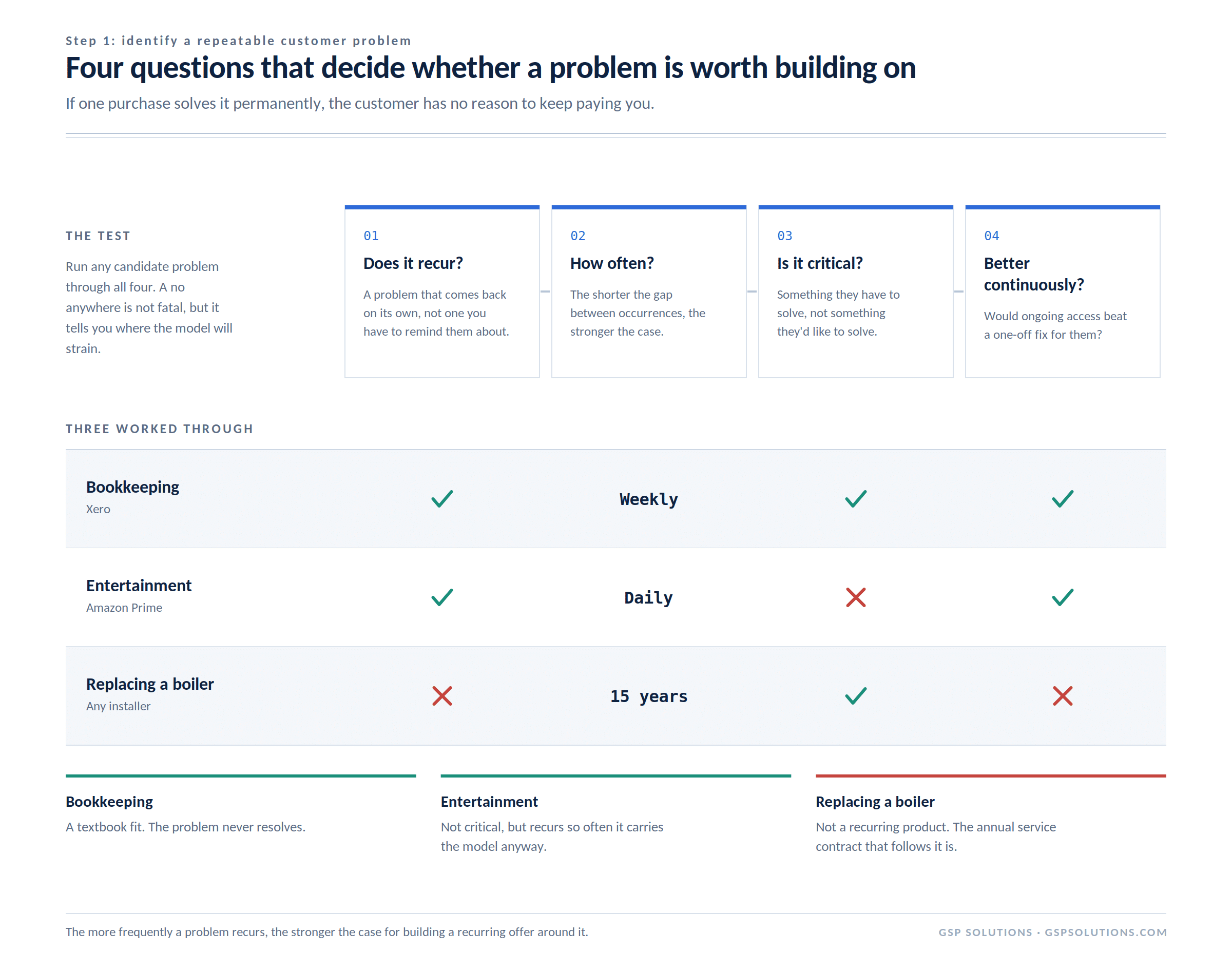
For example, Xero solves an ongoing bookkeeping and invoicing problem, and Amazon Prime satisfies an ongoing entertainment need. The more frequently a problem recurs, the stronger the case for building a recurring revenue offering around it.
On the flipside, if a single purchase resolves a customer’s issue permanently, they have no reason to keep paying you.
So, ask yourself:
- What regular problem does my customer experience?
- How often does that problem occur?
- Is it business-critical to solve?
- Would the customer benefit from continuous access to a solution, rather than a one-off fix?
Step 2: Choose a Revenue Model
After identifying the problem you solve, decide how you’ll sell your solution — subscription, usage-based, retainer, membership, licensing, maintenance and support, or a hybrid of several.
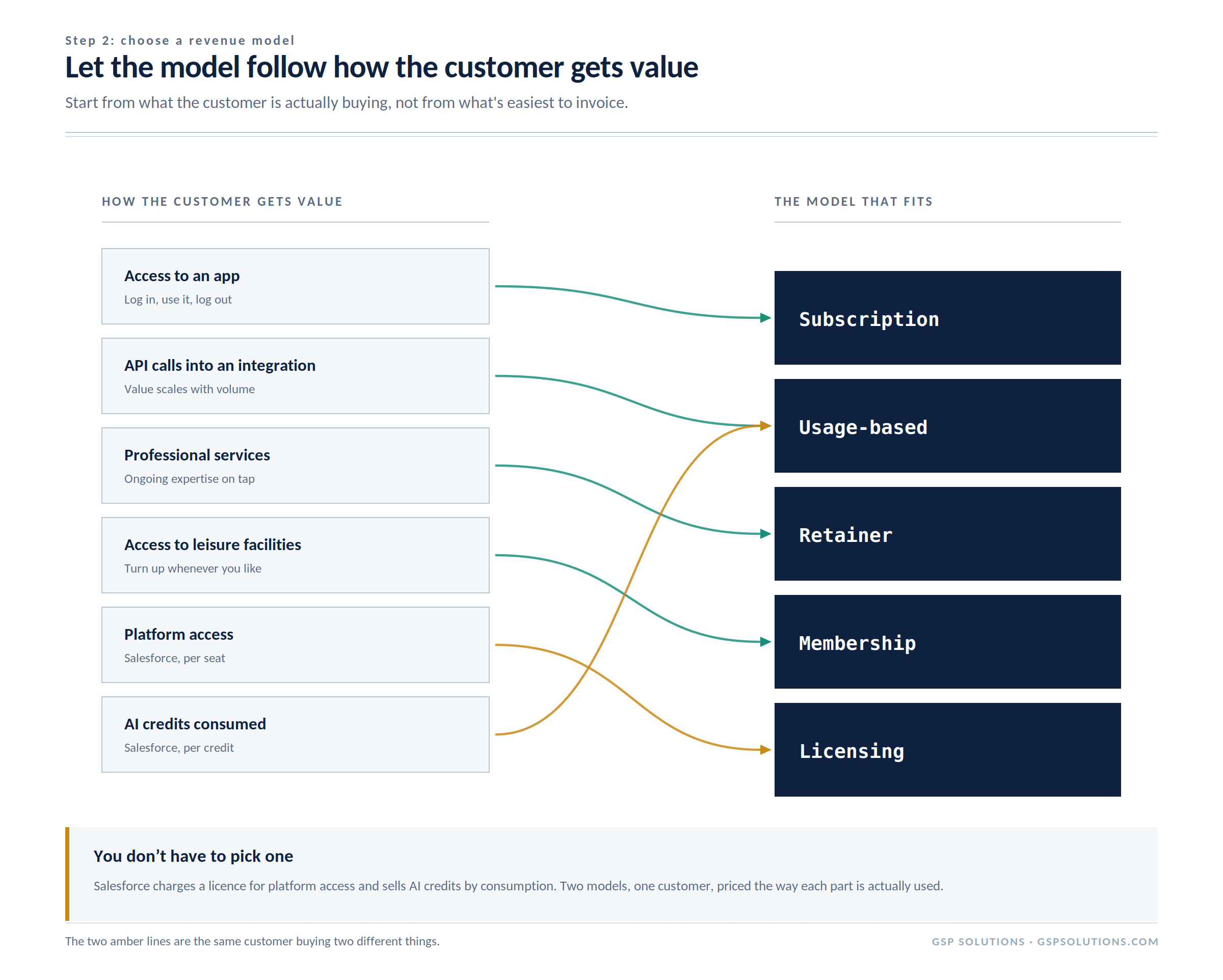
The right model aligns with how customers use and benefit from what you sell:
| Access to an App | Subscription |
| Integration Tool using API Calls | Usage-Based |
| Professional Services | Retainer |
| Access to Leisure Center Facilities | Membership |
| Salesforce Access | Licensing |
You don’t need to commit to a single model.
Salesforce, for instance, charges a licensing fee for platform access, but also sells AI credits on a usage-based basis.
Step 3: Define a Pricing Strategy
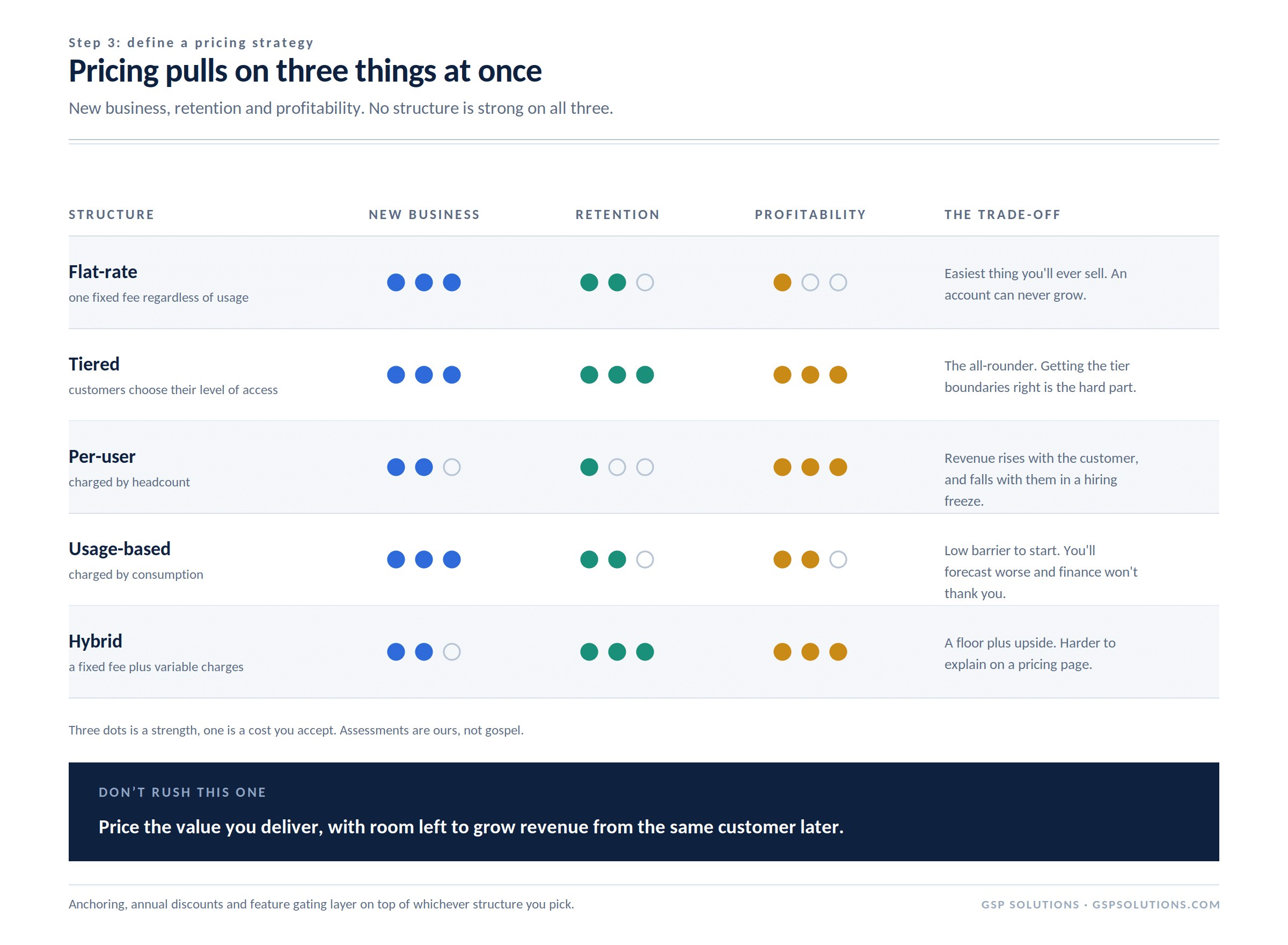
The five core recurring revenue pricing structures are:
- Flat-rate — one fixed fee regardless of usage
- Tiered — customers choose their level of access
- Per-user — charged by headcount
- Usage-based (charged by consumption)
- Hybrid — a fixed fee plus variable charges.
The pricing strategy directly impacts new business, retention, and profitability, so don’t rush the process.
In a nutshell, the price should reflect the value your offering delivers — while still leaving room to grow revenue and retain that customer over the long term.
Our full guide to pricing strategies for recurring revenue covers each model, and the tactics — anchoring, annual discounts, feature gating — that businesses layer on top of them.
Step 4: Build Retention Systems
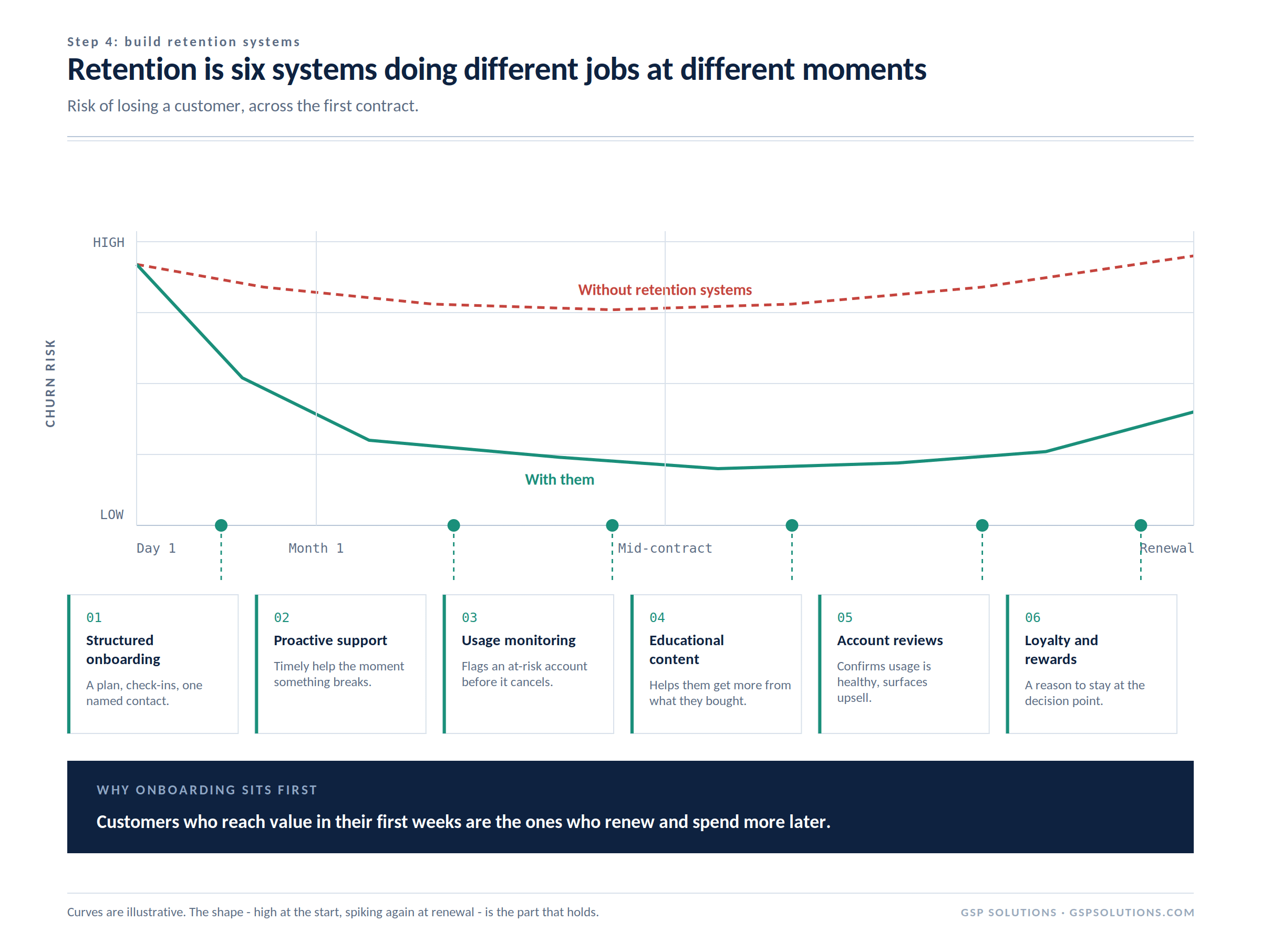
Recurring revenue businesses rely on six retention strategies:
- Structured onboarding — a clear plan to get customers up and running, with regular check-ins and a dedicated point of contact.
- Proactive customer support — easy access to timely, reliable help when something goes wrong.
- Regular account reviews — scheduled check-ins throughout the contract to confirm usage is healthy and to surface upsell or cross-sell opportunities.
- Educational content and training — a knowledge base and training materials that help customers get more from what they’ve already bought.
- Loyalty and reward programs — an incentive to stay, whether that’s a discount, early access, or free upgrades.
- Product usage monitoring — tracking usage to flag at-risk accounts before they cancel so that you can intervene early.
Onboarding sits at the top of this list because customers who realize value from a product within their first few weeks — or days, depending on the product — are more likely to renew and to increase their spend with you later.
Recurring revenue businesses require effective retention systems to grow. If you can’t retain customers, you will need to acquire more customers, which is more expensive.
It’s also easier to sell additional services or products to existing customers. Benchmarkit (2025) showed that SaaS businesses spent a median of $2 to acquire $1 in new customer annual recurring revenue, while expansion CAC was only $1.
Step 5: Improve the Customer Experience
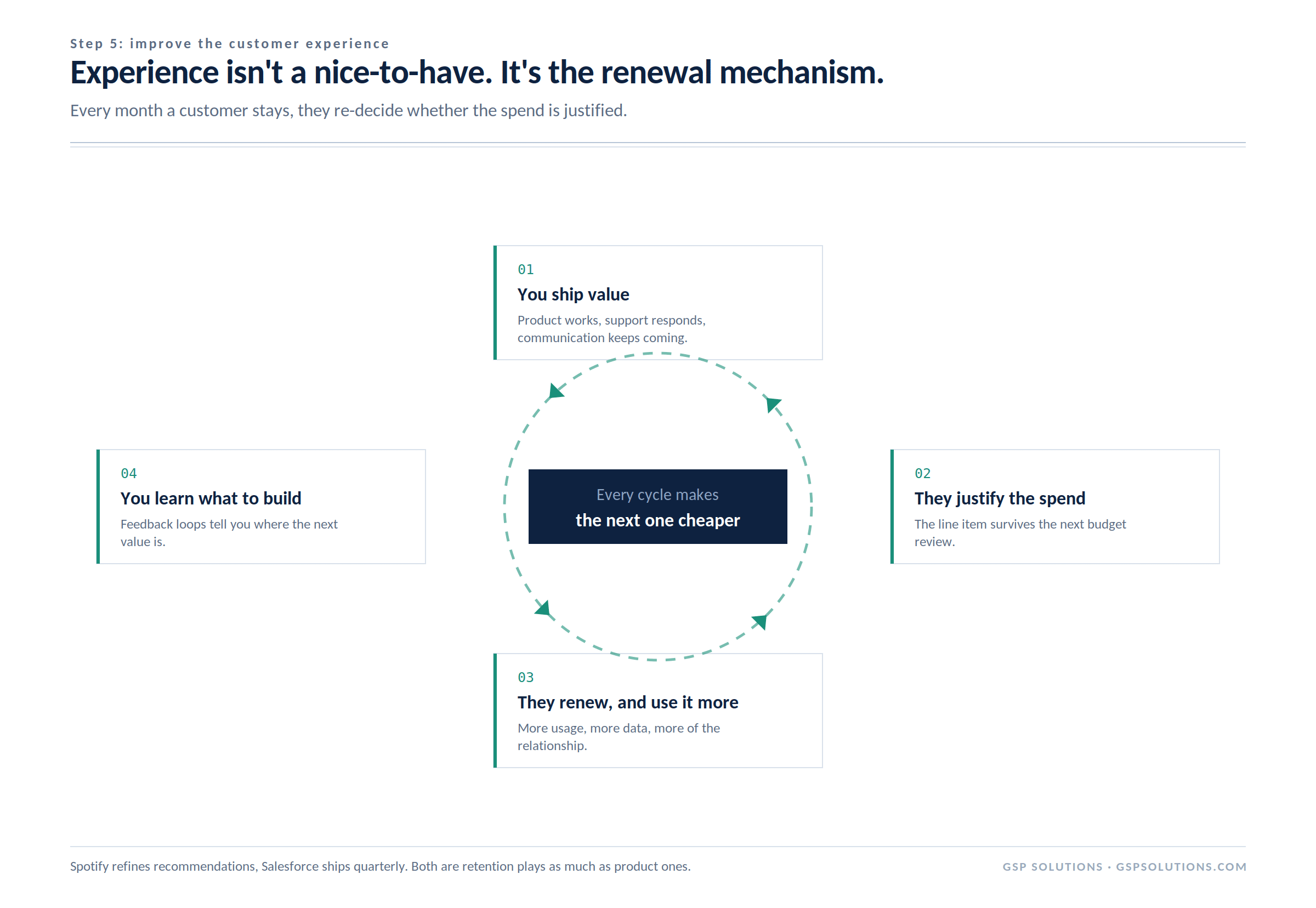
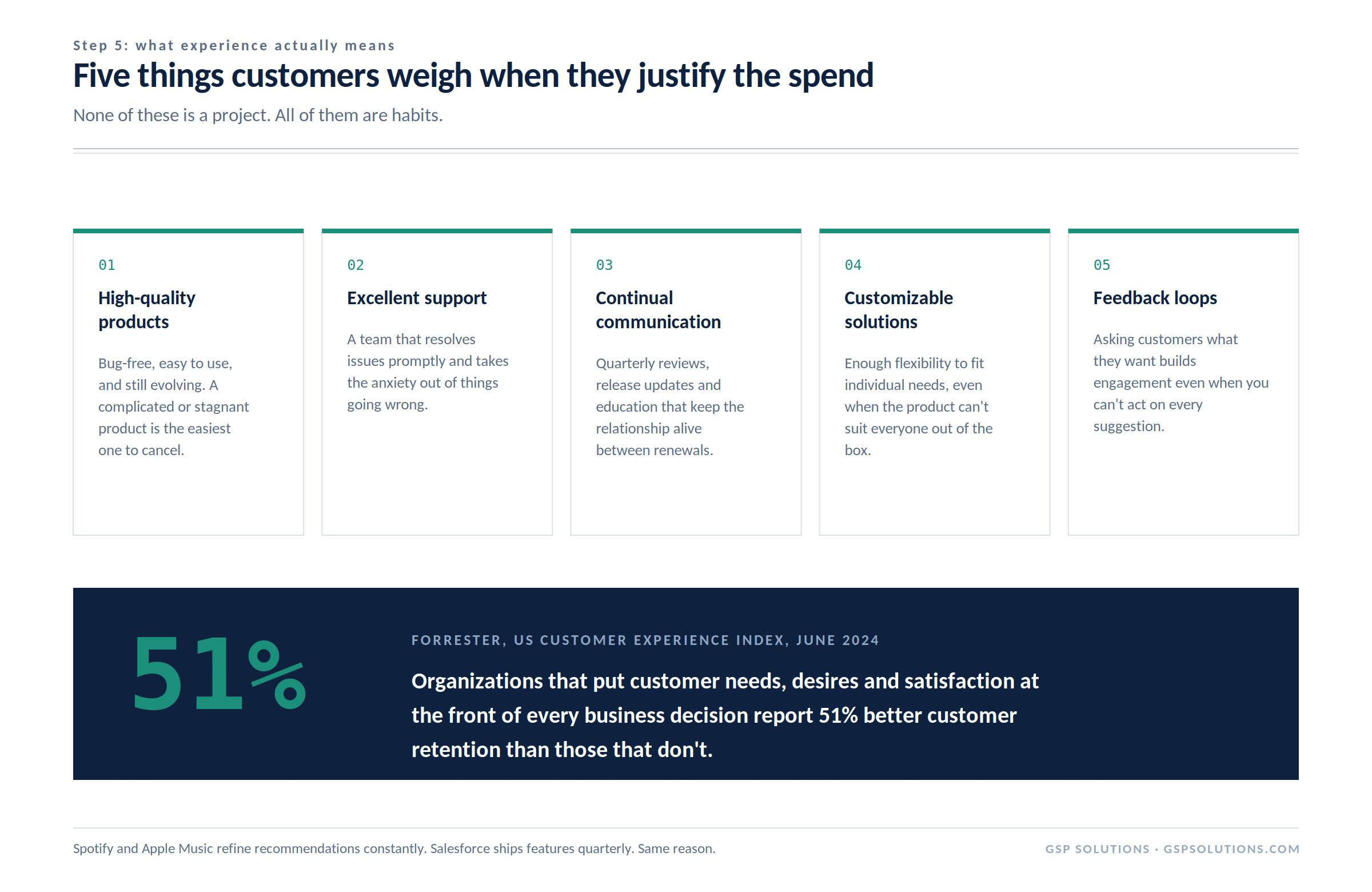
Five things consistently shape how customers justify their continued spending:
- High-quality products — bug-free, easy to use, and evolving with customer needs and industry trends. A customer is more likely to cancel a complicated or stagnant product.
- Excellent customer support — a dedicated team that resolves issues promptly and reduces customer anxiety around problems.
- Continual communication — quarterly reviews, release updates, and educational content that keep the relationship active between renewals.
- Customizable solutions — enough flexibility to tailor to individual customer needs, even if the product can’t be everything to everyone out of the box.
- Feedback loops — regularly asking customers what they’d like to see, which builds engagement even when you can’t act on every suggestion.
Spotify and Apple Music continually refine recommendations and interfaces to keep listeners engaged; Salesforce ships new features quarterly for the same reason.
Experience quality shows up in retention: Forrester (June, 2024) found that organizations “putting customers’ needs, desires, and satisfaction at the forefront of all business decisions and actions” report 51% better customer retention than those that don’t.
Step 6: Automate Billing and Renewals
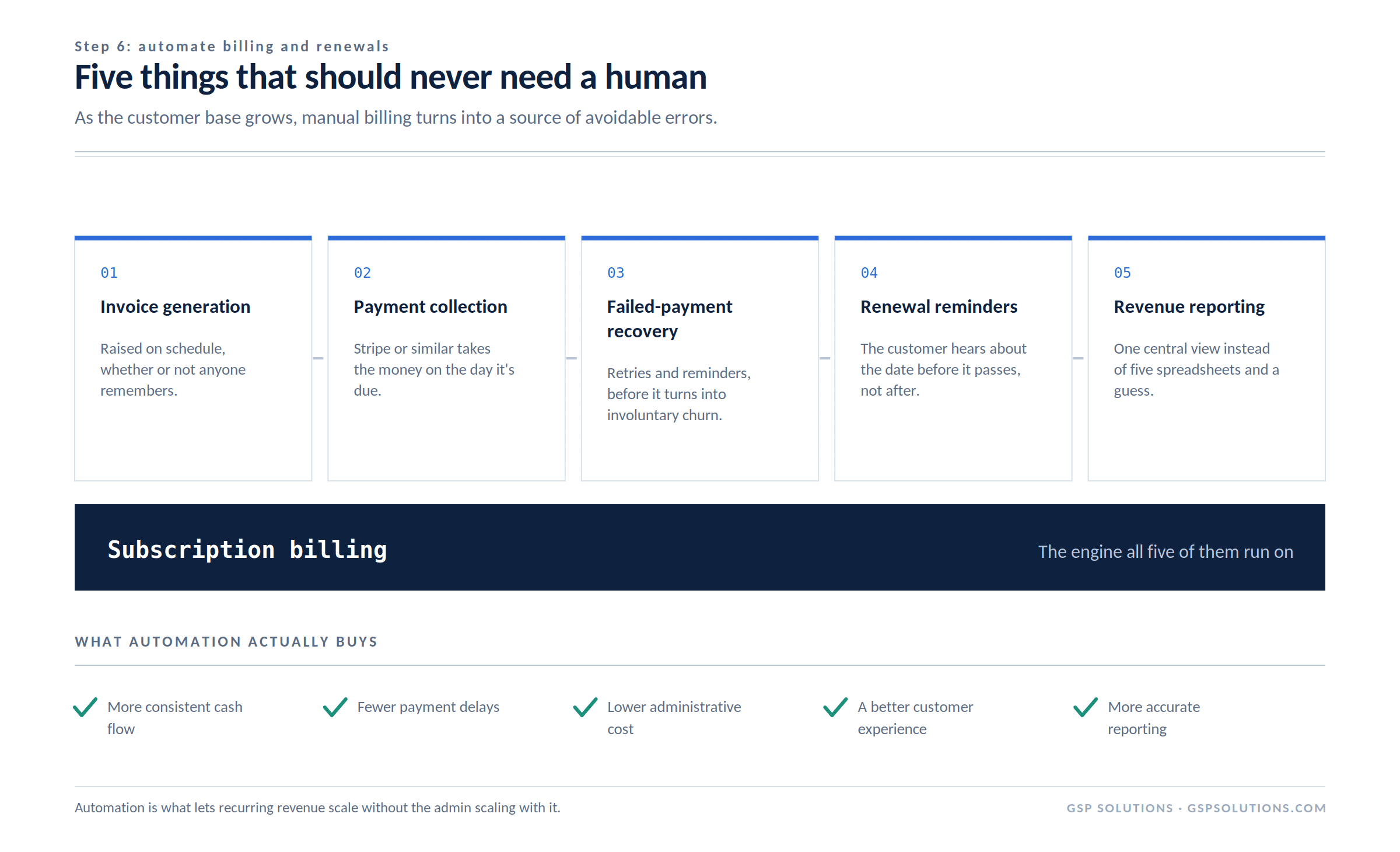
Commonly automated areas in recurring revenue businesses include:
- Subscription billing
- Payment collection (via tools like Stripe)
- Invoice generation
- Renewal reminders
- Failed-payment recovery
- Centralized revenue reporting
As your customer base grows, manual billing becomes inefficient and a source of avoidable errors.
Automation is what enables recurring revenue to scale with more consistent cash flow, fewer payment delays, lower administrative costs, a better customer experience, and more accurate financial reporting.
Building for Long-Term Success
By identifying the right problem to solve, choosing an appropriate model, building genuine retention systems, and continually improving the customer experience, you lay the groundwork for compounding revenue.
Once these foundations are in place, the next priorities are usually to get your key recurring revenue metrics under control and to build a reliable forecast — both of which are covered in their own dedicated guides.
FAQs
Start building your recurring revenue business by identifying a customer problem that occurs repeatedly. Then choose a recurring revenue model that aligns with what you sell and the value it offers, develop a pricing strategy, implement customer retention processes, and automate billing and renewals. The most successful businesses focus on delivering continuous value that encourages customers to remain long-term.
