

6 Key Future Trends in Recurring Revenue [For 2026 & Beyond]
Learn what the future holds for recurring revenue businesses. Discover 6 future recurring revenue trends, what drives them, and what you can do to get ready.
Last updated November 2, 2026

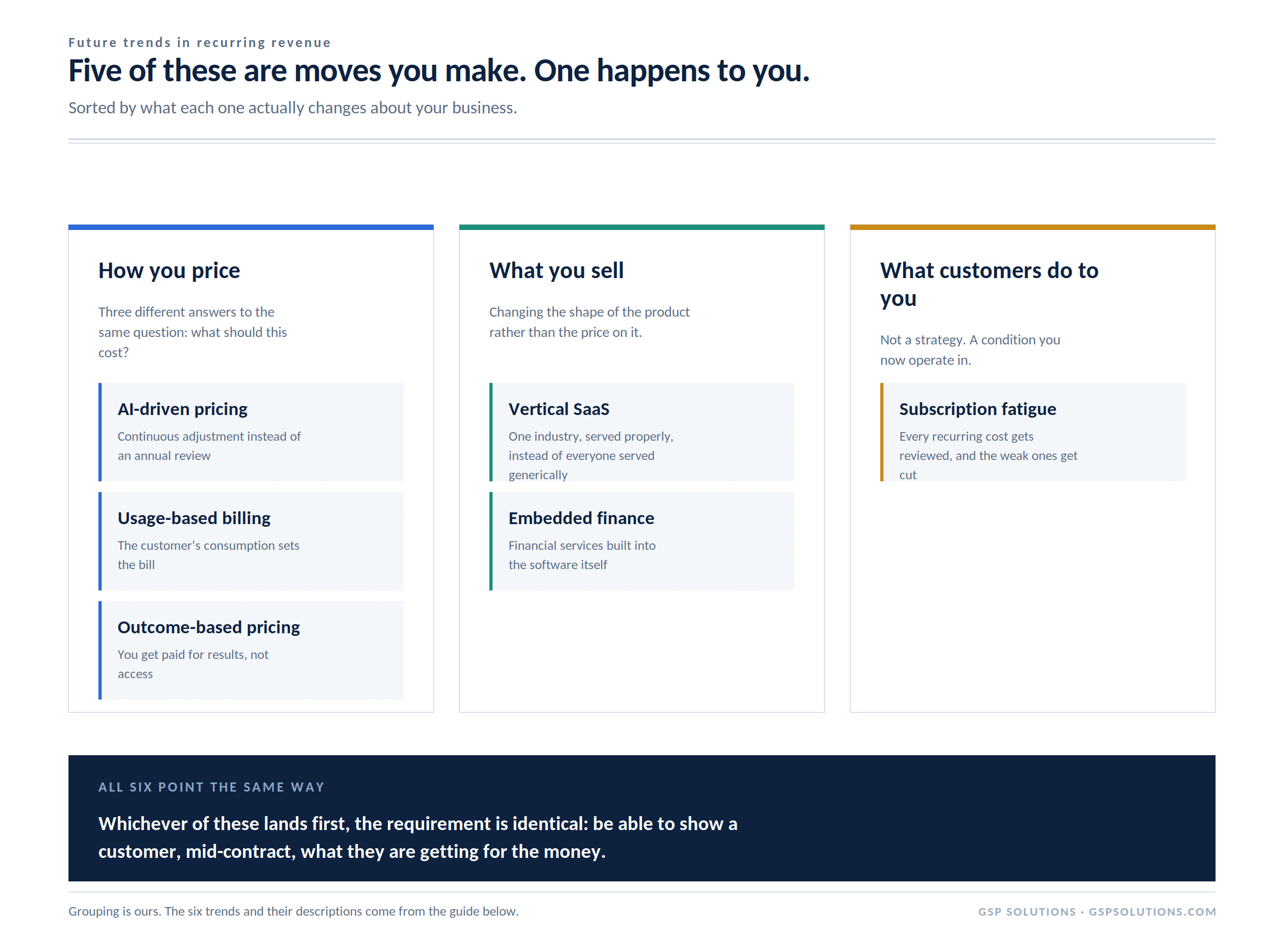
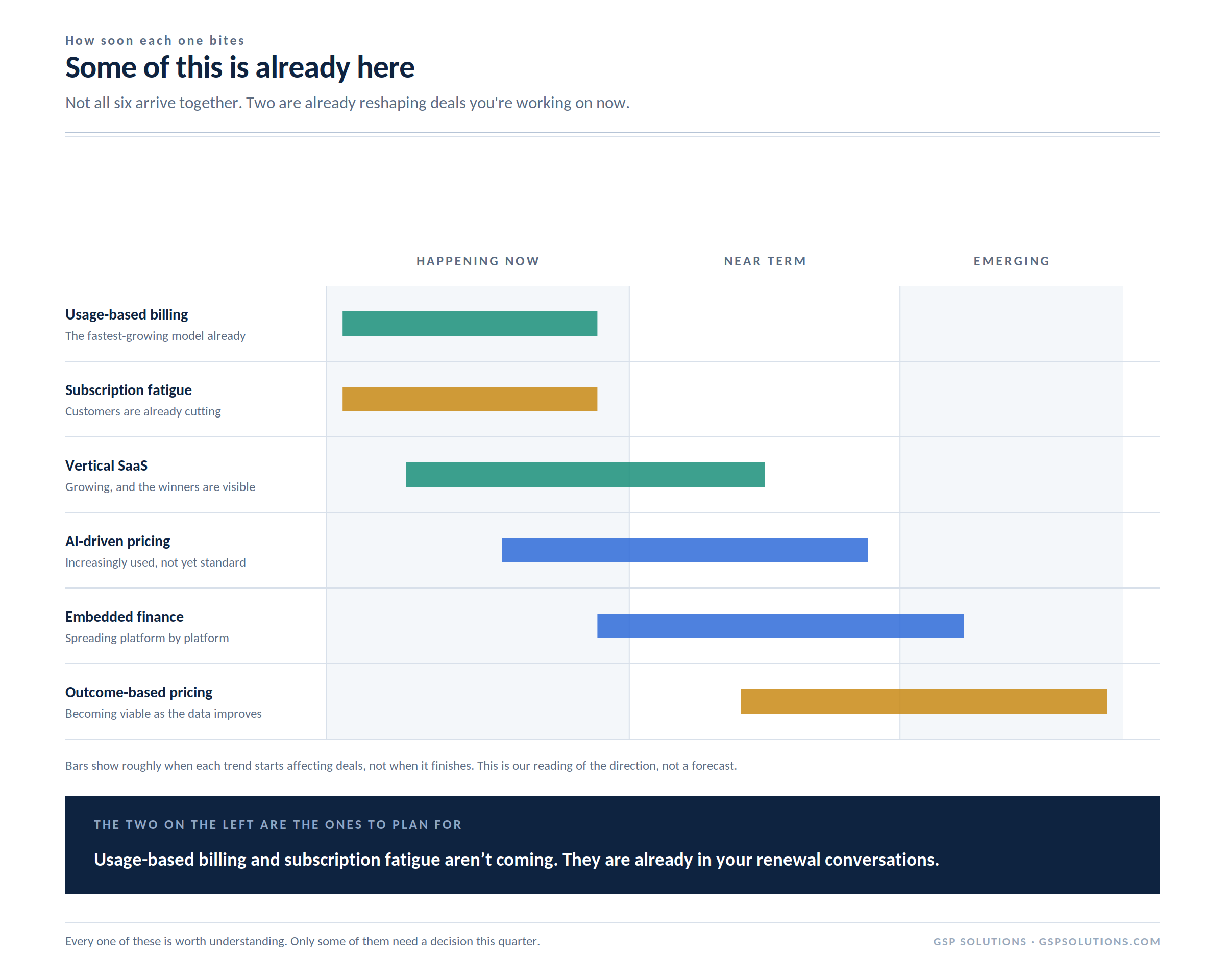
Six trends will shape recurring revenue over the next few years:
- AI-driven pricing
- Usage-based billing
- Vertical SaaS
- Embedded finance
- Outcome-based pricing
- Subscription fatigue
Data will remain central to recurring revenue, but AI, automation, and evolving customer expectations will continue to reshape how recurring revenue businesses price, sell, and retain customers.
Our guide unpacks each of the trends: what they mean, what’s driving them, and how you can leverage them to grow your recurring revenue business.
Recurring Revenue Future Trends At a Glance
If you’re short of time, here’s an overview of the recurring revenue trends that will shape the future of your business.
| AI-driven pricing | Using AI to set and adjust prices continuously, rather than a manual annual review | AI can weigh usage, purchase history, competitor pricing, and willingness to pay together far faster than a team can. | Start with the customers who consistently hit usage limits; price to observed behavior. |
| Usage-based billing | Charging for what customers consume: API calls, transactions, storage, data processing. | Low entry price, revenue that scales with the customer, and flexibility for variable usage | Consider a hybrid: a stable subscription base with usage-based charges layered on top. |
| Vertical SaaS | Products built for one industry rather than serving every business generically | Building around a single industry's workflow raises switching costs and narrows the competitive field. | Go deep in a defined market. |
| Embedded finance | Payments, lending, insurance, or financing are built directly into the software. | Keeping more of the workflow within one product and opening a new revenue stream. | Look at where customers currently leave your product to complete a transaction. |
| Outcome-based pricing | Charging for measurable results such as leads delivered or cost savings, rather than for access | Better access to customer performance data makes outcomes easier to attribute | Viable where the outcome is clearly measurable and attributable to you. The risk sits with the vendor. |
| Subscription fatigue | Customers review every recurring cost and cut redundant expenses | Too many subscriptions, weak onboarding, low ongoing engagement, and price rises that invite fresh scrutiny | Keep proving value, offer flexible pricing, and low-friction management |
Future Trend #1: AI-Driven Pricing
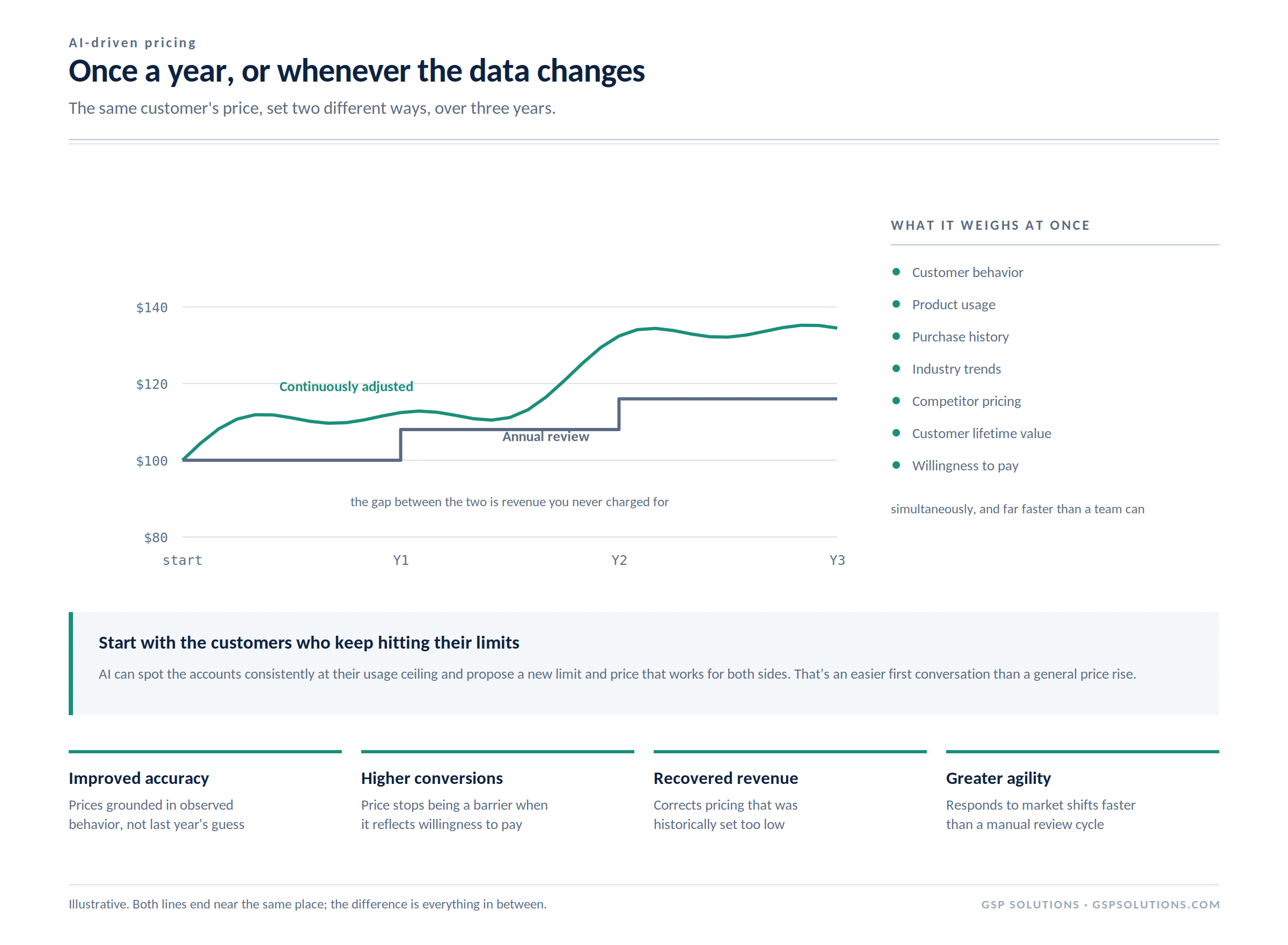
Businesses are increasingly using AI to inform pricing decisions instead of relying on manual reviews or a single annual price change.
AI can analyze customer behavior, product usage, purchase history, industry trends, competitor pricing, customer lifetime value, and willingness to pay simultaneously. And far faster than a human team could manage.
A practical example: AI can identify customers who consistently hit their usage limits and recommend a new limit and price point that works for both sides.
Six trends will shape recurring revenue over the next few years:
- Improved pricing accuracy
- Higher conversions because price becomes less of a barrier when it’s grounded in real willingness-to-pay data
- Increased revenue from correcting historically undervalued pricing. Greater agility in responding to market shifts than manual pricing reviews allows.
Future Trend #2: Growth of Usage-Based Billing
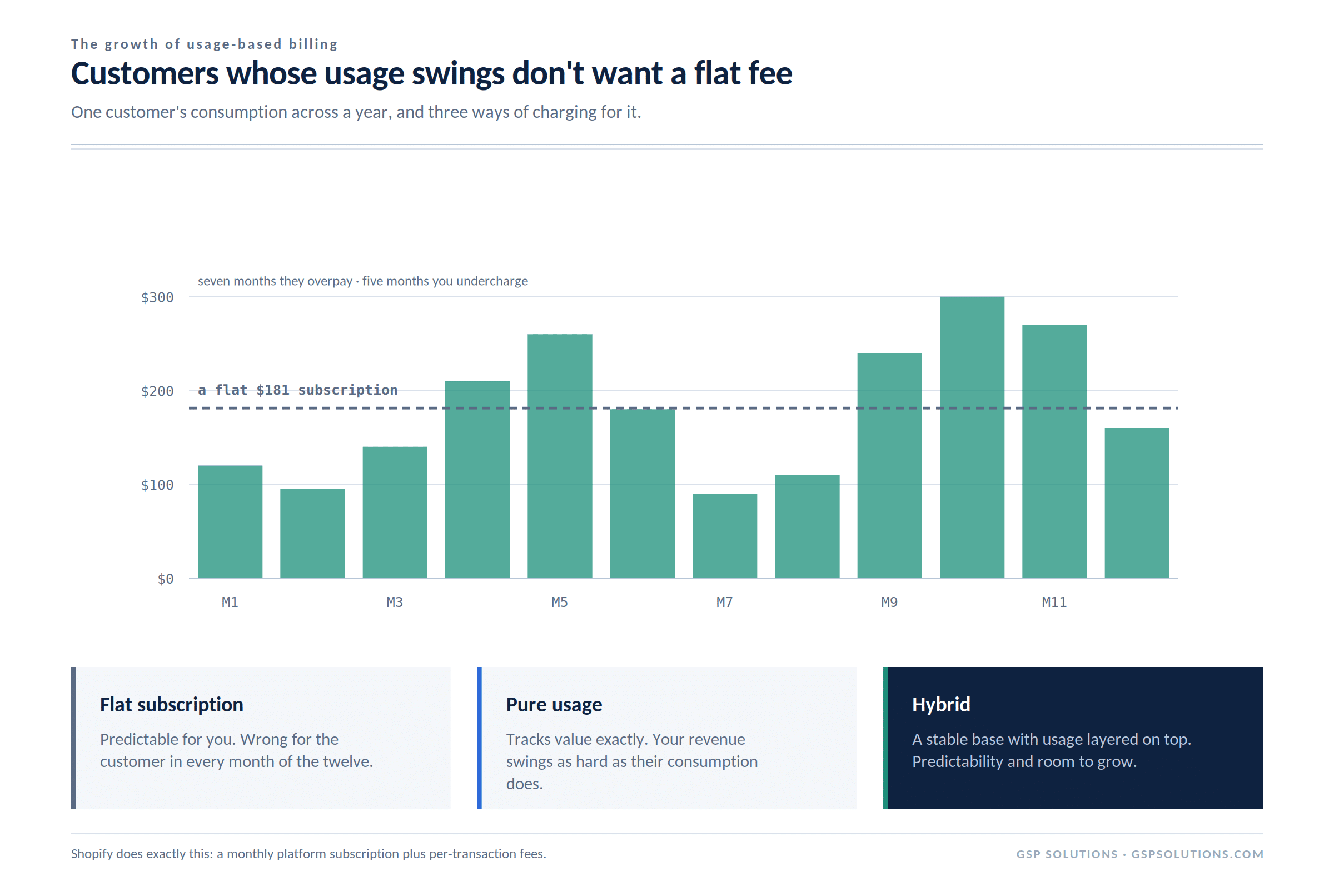
Usage-based billing is the fastest-growing recurring revenue model, particularly in cloud software and technology, where customers increasingly prefer to pay for what they actually consume — API calls, transactions, storage, or data processing — rather than a fixed subscription regardless of use.
The appeal is a low barrier to entry, because the smallest unit of usage is often the entry price point, pricing that scales naturally alongside a customer’s growth, and genuine flexibility for customers whose usage varies month to month.
Many businesses are adopting it as part of a hybrid model, pairing a stable subscription base with usage-based charges layered on top, balancing predictability with room to grow.
For example, Shopify charges e-commerce retailers a monthly subscription for access to the platform plus per-transaction fees.
Future Trend #3: Growth of Vertical SaaS
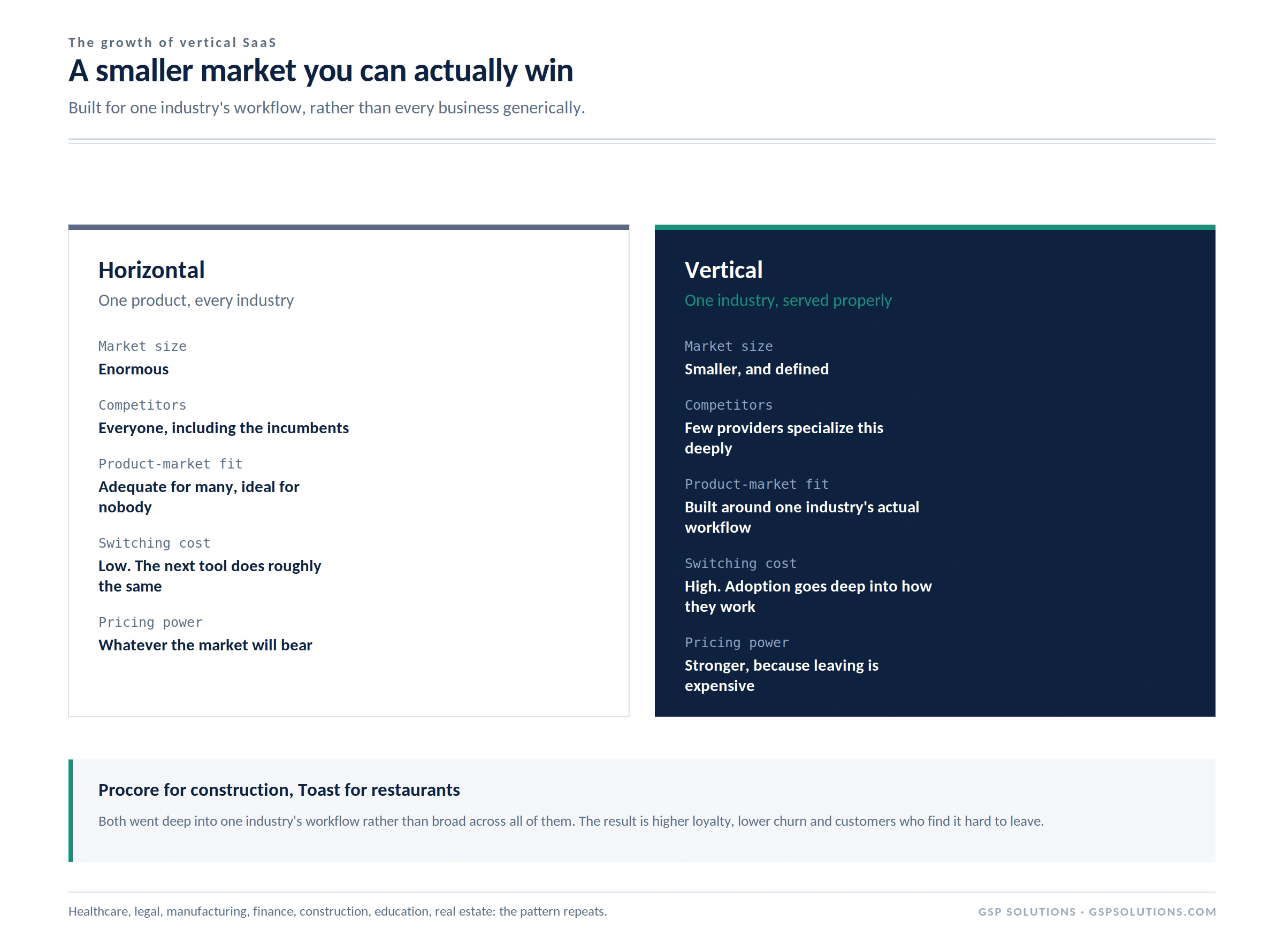
Vertical SaaS refers to subscription-based products built specifically for a single industry or niche, such as healthcare, legal, manufacturing, finance, construction, education, or real estate.
For example, Procore is a project management tool built for construction businesses, and Toast is a management platform for the UK hospitality industry.
By focusing on solving very specific problems for a defined market, vertical SaaS products tend to see higher customer loyalty and lower churn than generalist alternatives.
They also have a better product-market fit, reduced competition (since fewer providers specialize this deeply), and stronger pricing power, because customers who’ve fully adopted an industry-specific tool find it difficult to switch away.
Future Trend #4: Embedded Finance
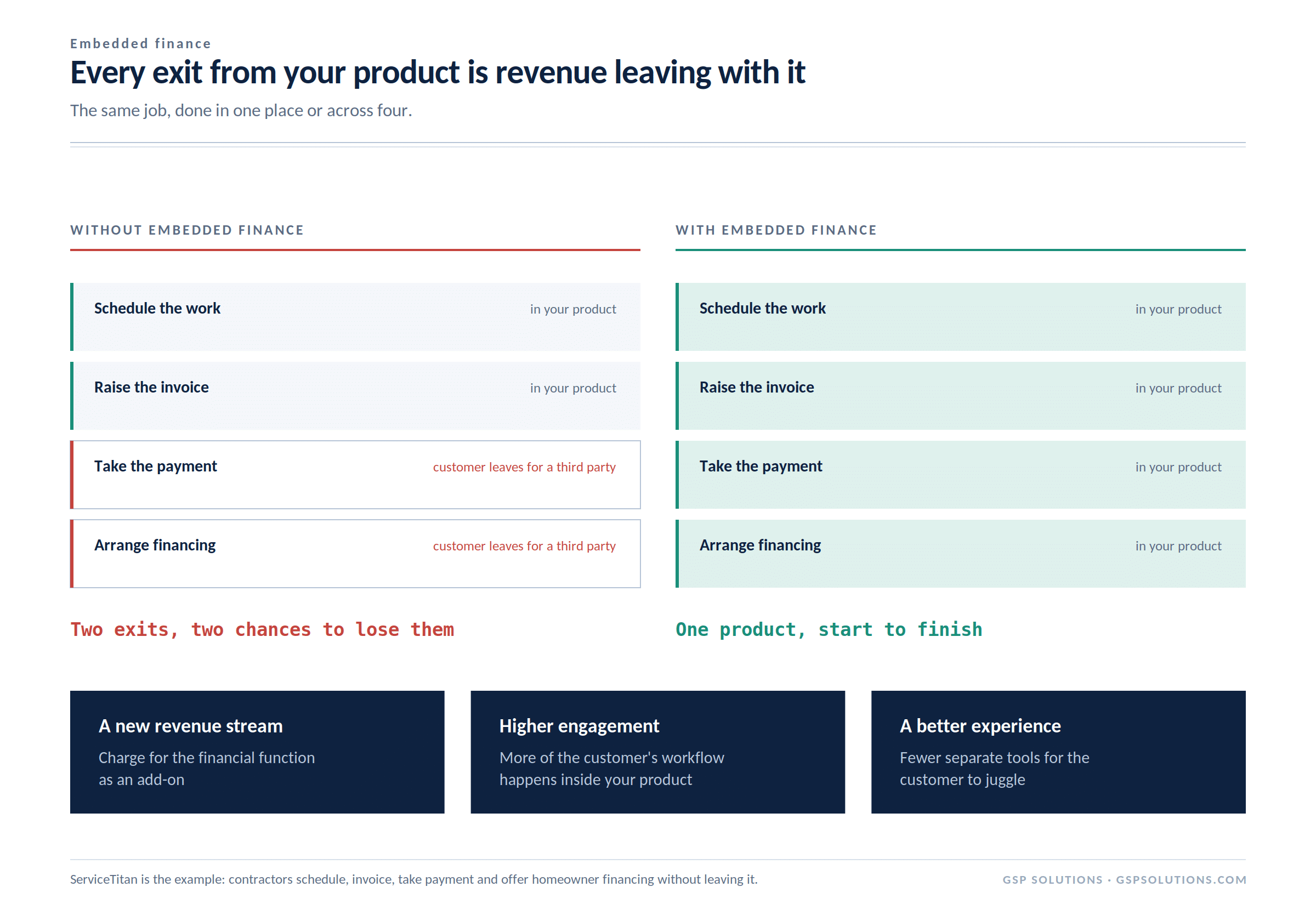
Embedded finance brings financial services — payments, lending, insurance, or financing — directly into software platforms, so customers can complete transactions without leaving the application they’re already using.
A field service management platform like ServiceTitan is a good example: contractors can schedule work, invoice, and take payment in one place, and it can offer homeowners financing for a large job without either party leaving the software.
Six trends will shape recurring revenue over the next few years:
- Creates new revenue streams by allowing platforms to charge for financial functions as add-ons.
- Increases customer engagement by keeping more of the workflow within a single product.
- Improves the overall user experience by reducing the number of separate tools a customer needs to juggle.
Future Trend #5: Outcome-Based Pricing
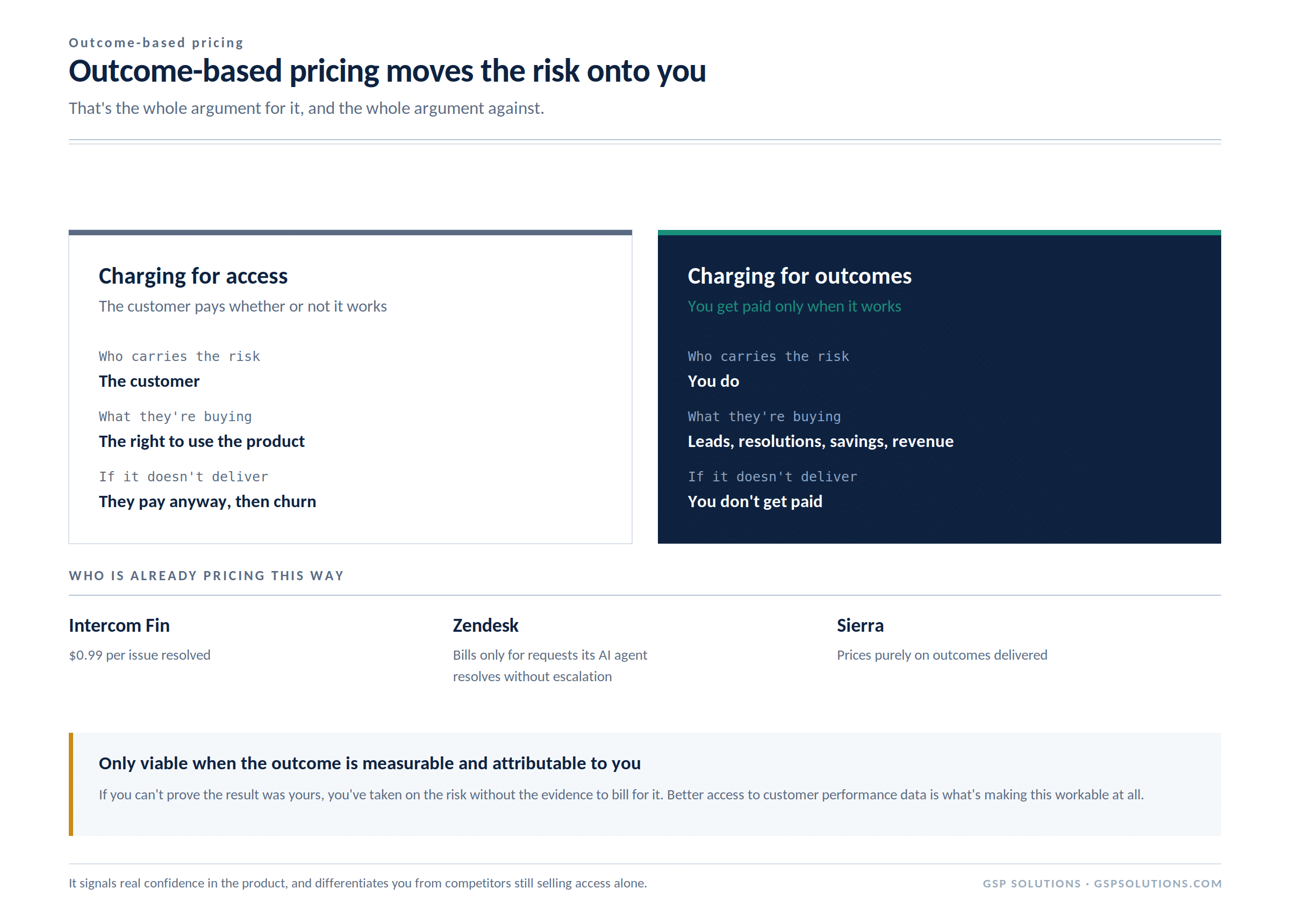
Outcome-based pricing charges customers for measurable results — such as revenue generated, productivity gains, cost savings, leads delivered, or successful transactions processed.
For example, Intercom's Fin charges $0.99 per outcome, Zendesk bills only for requests its AI agent resolves without escalating to a human, and Sierra, founded by former Salesforce co-CEO Bret Taylor, prices purely on outcomes delivered.
The appeal of outcome-based pricing is real:
- It demonstrates confidence in your own product, because you only get paid if it delivers.
-
It creates tighter alignment with customer expectations.
-
It encourages genuinely long-term relationships built on meeting shared targets.
- It differentiates you from competitors who still sell on access alone.
Future Trend #6: Subscription Fatigue
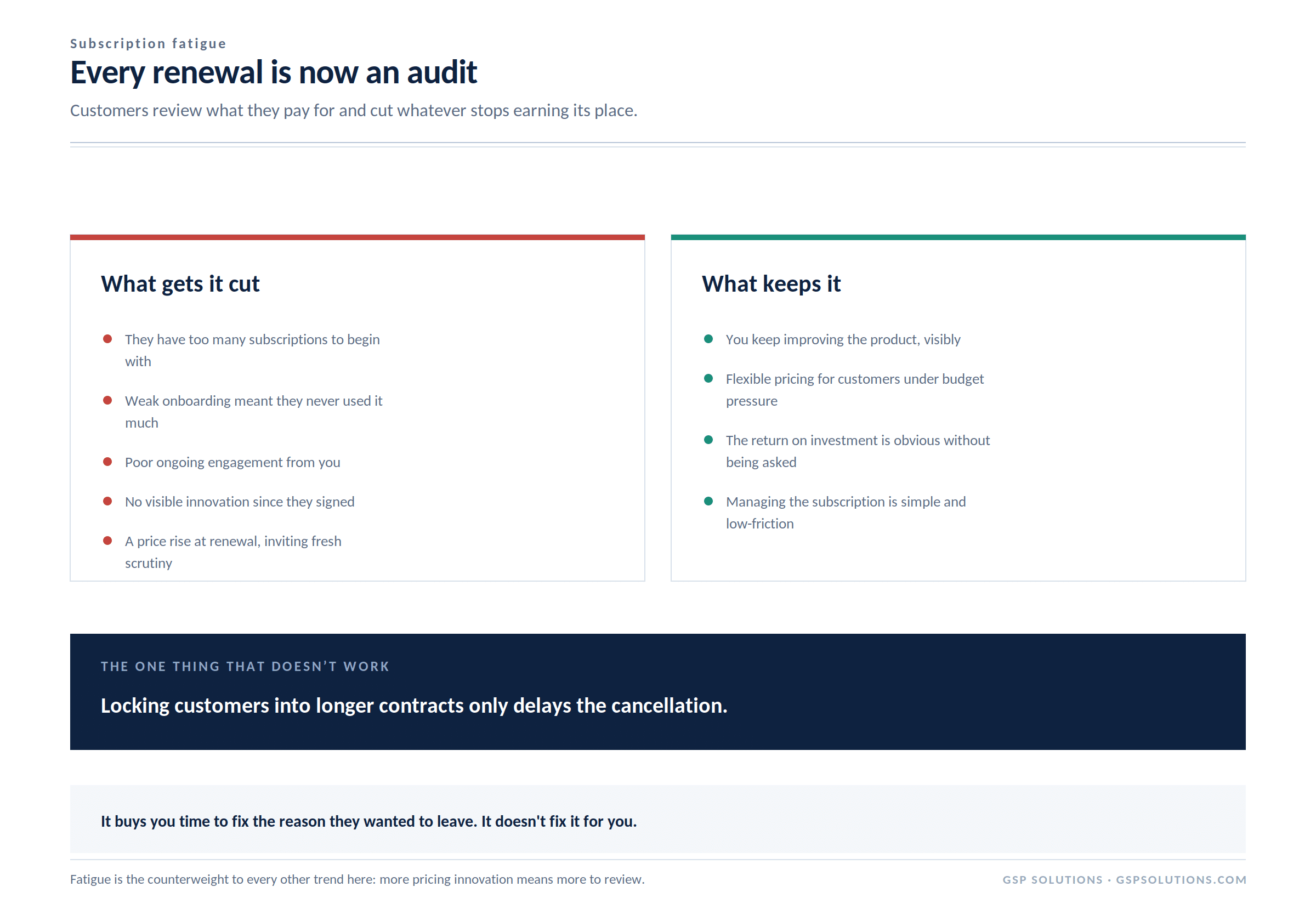
The trend is driven by:
-
Having too many subscriptions to begin with.
-
Limited product usage after a weak onboarding experience.
-
Poor ongoing engagement from the vendor.
- Lack of visible innovation.
-
Rising prices at renewal.
Locking customers into longer contracts only delays the cancellation.
To reduce the impact of subscription fatigue on your business:
-
Keep improving their products.
-
Offer flexible pricing options for customers under budget pressure.
-
Make the return on investment clear.
- Keep subscription management simple and low-friction.
-
Rising prices at renewal.
Preparing for What’s Next
-
The future of recurring revenue will be shaped by new technology, changing customer expectations, and pricing that matches the value customers get.
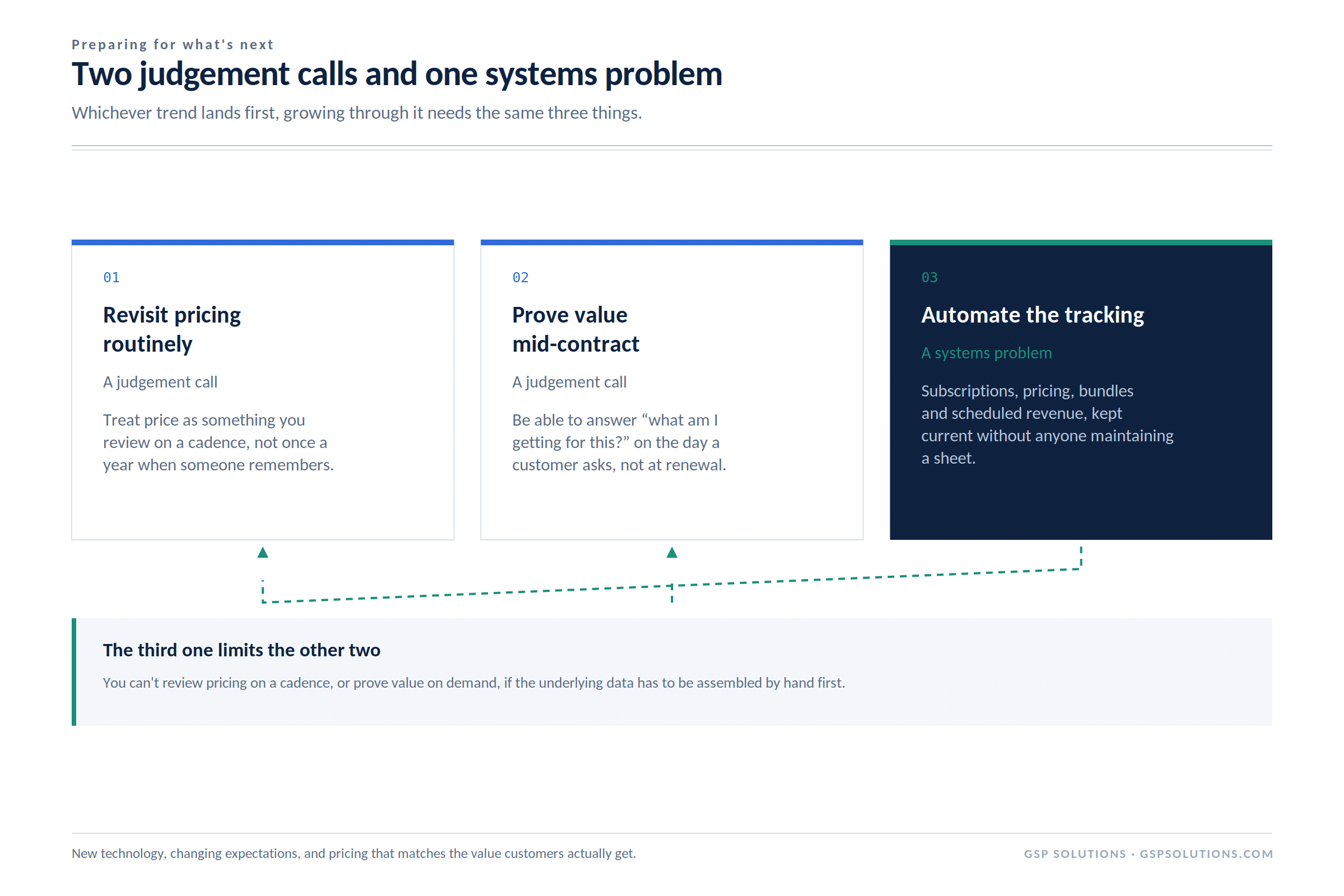
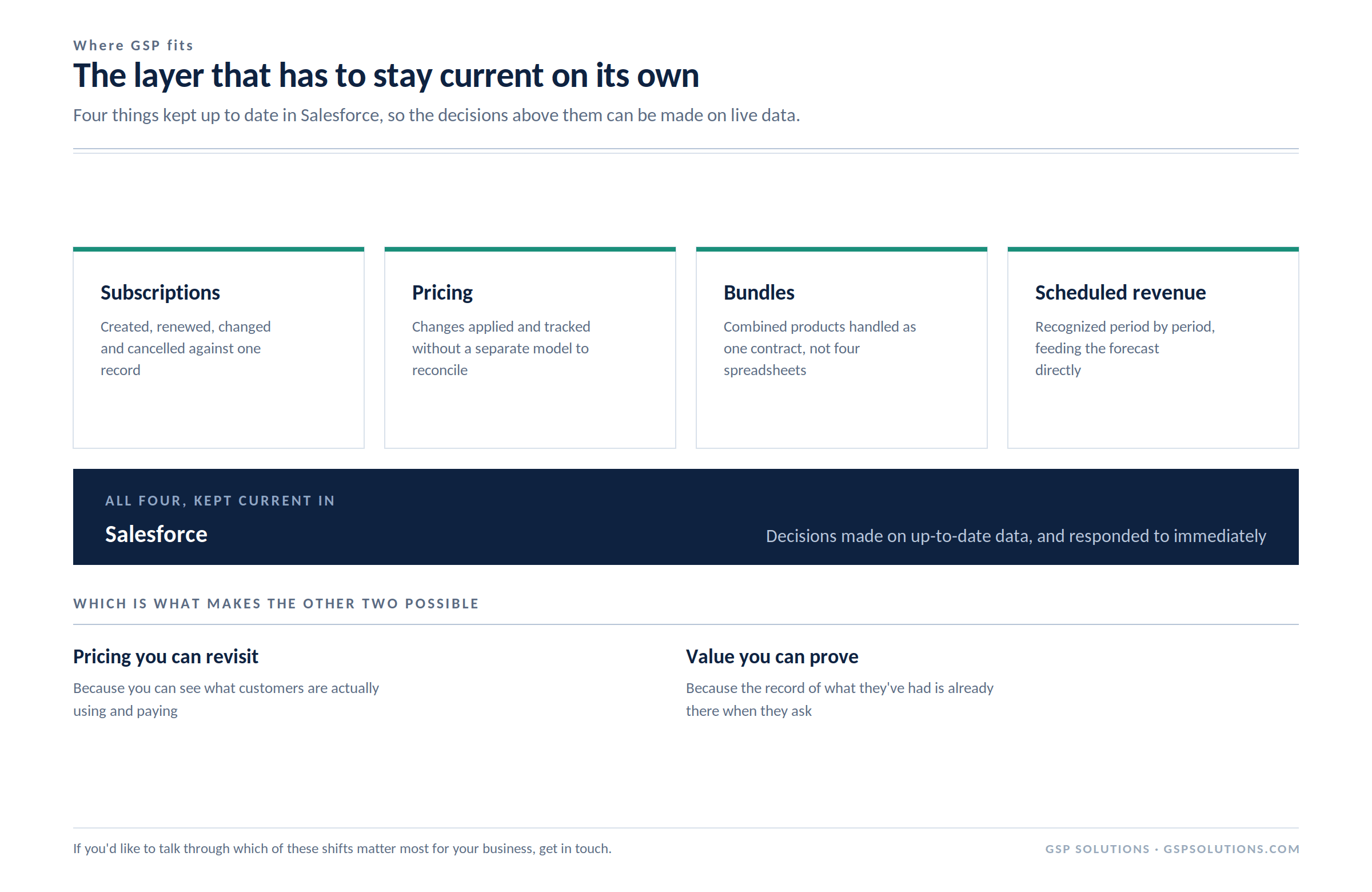
Growing through the changes will require getting good at three things: treating pricing as something you revisit routinely rather than once a year, being able to demonstrate value to a customer who asks mid-contract, and automating the tracking that supports both.
The first two are judgment calls. The third is a systems problem, and it's the one that limits the other two.
That's the layer GSP's Salesforce apps handle: subscriptions, pricing, bundles, and scheduled revenue, all kept current in Salesforce, so you can make decisions on up-to-date data and respond immediately.
If you'd like to talk through which of these shifts matter most for your business, get in touch.
FAQs
The future of recurring revenue will be driven by artificial intelligence, automation, data-driven decision-making, and increasingly personalized customer experiences.
Businesses that continually demonstrate value, adapt their pricing models, and strengthen customer relationships will be best positioned for long-term growth.

